Gunpowder

Definition and stakes

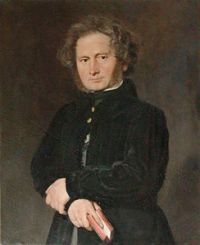
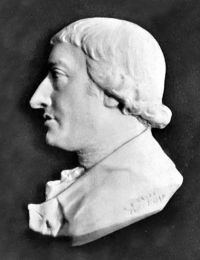
Portrait of Rudolf Erich Raspe Rudolf Erich Raspe,  The Surprising Adventures of Baron Munchausen

“ At that very instant, when, in concert, they were to give the mortal dart upon us, I discharged a pistol at the train of gunpowder, which instantly exploded on every side, made all the lions recoil in general uproar, and take to flight with the utmost precipitation. In an instant we could behold them scattered through the woods at some distance, roaring in agony, and moving about like so many Will-o'-the-Wisps, their paws and faces all on fire from the tar and the gun-powder. ”
Source: Gutenberg

Edith King Hall,  Adventures in Toyland — IV. (1900)

“ Gunpowder,—smokeless gunpowder,—soundless gunpowder,—invisible gunpowder. Thus we may surround an enemy with enough gunpowder to blow up a town, but they neither see it nor hear it. In fact, they know nothing about it until they are blown up."
This time all the Toys nearly expired with fright! The Elephant only remained, as before, unmoved.
"Invisible gunpowder is more humane in the end," the Officer continued. "You are quite unaware of what is happening until you find yourself in pieces."
”
Source: Wikisource

H. W. L. Hime,  Gunpowder and Ammunition, Their Origin and Progress

“ The Arabic word barúd originally meant hail, was afterwards applied to saltpetre, and finally came to signify gunpowder. Our own word powder, which at first meant a fine, floury dust (pulvis) , is often used in the present day to designate the stringy nitrocelluloid, cordite—smokeless powder. The Chinese word yo means gunpowder now, although its first meaning was a drug or plant. For centuries gunpowder was called kraut in Germany, and to this day it is called kruid in Holland. The Danish krud has not long become obsolete. ”
Source: Gutenberg

Get perspective with Kwize: daily news enlightened by great literature