Summary

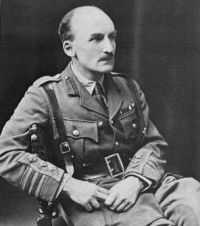
Portrait of J. F. C. Fuller J. F. C. Fuller Tanks in the Great War, 1914-1918

The mental athlete is the young man: the Great War, like all other wars, has proved this again and again. We have heard much of Hindenburg and Ludendorff, but they scoffed at the tank just as Wurmser and Alvinzi scoffed at the ragged voltigeurs of the Army of Italy with which the Little Corporal was, in 1796, about to astonish Europe. We have also astonished Europe, we who wandered over the Somme battlefield with dimmed eyes, and over the Flanders swamps with a lump in our throats.
Source: Gutenberg

Portrait of J. F. C. Fuller J. F. C. Fuller Tanks in the Great War, 1914-1918

Time and again has it been asserted that war itself is the sole test of a soldier’s worth and that on the battlefield alone will the great be sifted from the little.
And why? Because, until to-day, we have never emerged from what may be called the “alchemical” epoch of warfare, the compounding of illusions without knowledge, the application of actions without understanding; we have not reduced war to a science founded on definite principles nor learnt that 99 per cent. of victory depends on weapons, machinery placed in the hands of man so that he may kill without being injured.
Source: Gutenberg

Portrait of J. F. C. Fuller J. F. C. Fuller Tanks in the Great War, 1914-1918

Do not, therefore, let us mark time on our own graves, do not let us hark back to 1914 with its rifles and its ammunition boots, its sabres and its horseshoes, and all its muscular barbarism; let us plan and let us think, thus shall we penetrate the veil of the future, thus shall we learn how to equip our Army with a brain and with a body which united, if war be ever again forced upon us, will compel victory at the smallest possible cost.
Source: Gutenberg

Get perspective with Kwize: daily news enlightened by great literature