The phonograph, a device for mechanical and analog sound reproduction, revolutionized audio playback by etching sound waves as grooves onto cylinders or discs, later known as gramophones or record players. Invented by Thomas Edison in 1877, it advanced through innovations such as Alexander Graham Bell’s wax cylinders and Emile Berliner’s flat discs, shaping home entertainment and music distribution. Authors such as Alfred Marshall Mayer compared its grooves to Morse code, while Gerald Stanley Lee praised its ability to amplify voices worldwide.
John Munro emphasized its practical applications in business, and Benjamin Ives Gilman observed its musical accuracy despite flaws. Bertha May Clark highlighted its role in democratizing music access, while T. Baron Russell foresaw its potential synergy with moving pictures. These viewpoints collectively illustrate the phonograph’s dual significance as a technological breakthrough and a cultural force, linking the analog past with its modern resurgence.
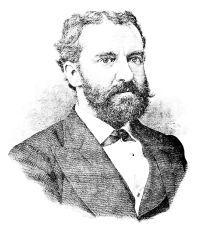 Alfred Marshall Mayer,
Popular Science Monthly
(1877)
Alfred Marshall Mayer,
Popular Science Monthly
(1877)