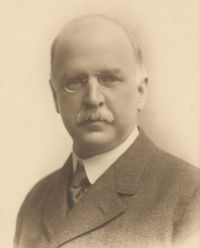
Ernest Cushing Richardson

Ernest Cushing Richardson

Summary

Portrait of Ernest Cushing Richardson Ernest Cushing Richardson The Beginnings of Libraries

And that tabu was on the apples of Iduna, the fruit of the tree of knowledge between good and evil, which springs from the fountains of memory and reflection,—the golden apples of strife which some say give immortality, some death. What is this tree whose fruit is tangible knowledge, the food of the gods and which was in the beginning with the first man, but a library, and what did those old philosophizers mean by what they set down about the first man and the way they put it?
Source: Gutenberg

Portrait of Ernest Cushing Richardson Ernest Cushing Richardson The Beginnings of Libraries

The most insignificant object, therefore, kept to suggest something not itself may be a library. A single word book is of course a very insignificant book indeed, and the single letter, single word, single book library a still more insignificant library, but, unless you invent other words for them, they are truly book and library, and there is no more reason to invent another word for book or library in this case, than another word for animal when it is intended to include both the amoeba and man.
Source: Gutenberg

Portrait of Ernest Cushing Richardson Ernest Cushing Richardson The Beginnings of Libraries

The distinction of and main justification for all kinds of higher education is that such education aims to put the student in position to view his work to be done as a whole, and life as a thing to be wrought out as a whole, not to be lived from hand to mouth. Presence at a library school means that the student has had foresight enough to be willing to spend energy, money, and a good bit of that most precious capital time, in sitting down to draw plans for his life building as a whole instead of starting in to build by rule of thumb.
Source: Gutenberg

Get perspective with Kwize: daily news enlightened by great literature