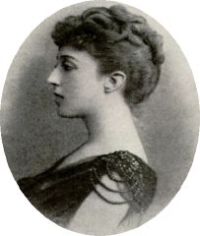
“ For anyone who knew the perfection of Martin’s rendering of the tones of West Galway, of the gestures, the pauses, that give the life of a story, the words lying dead on the page are only a pain. Perhaps, some day, portable and bindable phonography will be as much part of a book as its pictures are.Phonetic spelling in matters of dialect is a delusive thing, to be used with the utmost restraint. It is superfluous for those who know, boring for those who do not. ”
Phonography
Definition and stakes
The theme of “phonography” has been addressed by authors such as Denis Alphonsus Quinn, Alexander John Ellis, B. A. Hathaway, Martin Ross and Thompson Cooper. It is often associated with terms like alphabet, language, sound, vowel and phonetics.
Quotes about “phonography”
“ Man’s thoughts fly faster than his fingers, and it is only by the “wingéd words” of Phonography that the hand is enabled to keep pace with the mind. Almost inseparably connected with shorthand, is the typewriter.These two go hand in hand. What a boon they have proved to the busy merchant, the lawyer and the literary man!To this end, the General Society of Mechanics and Tradesmen, recognizing the growing demands for the use of Phonography and typewriting, added to their already large benevolence a class for the study of these branches. ”
“ The art of phonography is not a difficult one to learn; a moderate degree of rapidity is easily acquired, and first-class rapidity is not beyond the reach of many persons. I have conversed with professional phonographers, and the general impression is, that women are particularly well adapted to the art of phonography. ”
Thompson Cooper, Dictionary of National Biography (1901)
“ This enthusiastic propaganda extended to America and Australia, and wherever the English tongue was spoken the number of phonographers daily increased. At the present time phonography is doing nine-tenths of the shorthand writing and reporting of the English-speaking communities, and there is no other stenographic system that can approach it in the extent to which it is taught and used. Among short-hand clerks and amanuenses Pitman's is almost the only method employed. Several variations of the system have been published in the United States, but they are based on the original alphabet. ”
Denis Alphonsus Quinn, Stenotypy: Or, Shorthand by the Typewriter (1895)
“ As you will see, I have already become somewhat familiar with your system of Stenotypy. Whatever the hypocritical may think about it, I am satisfied that it meets a long felt want. I have often been wondering that someone did not invent long ago some system of shorthand for the typewriter. You have solved the problem. Perhaps some one will say it is not philosophical, as Mr. Pittman claims for his phonography. No matter, if it does the work. I fear some one will claim and try to wrest from you the glory of giving us a new invention of great value. ”
Various, Popular Science Monthly (1887)
“ The chief peculiarities in the method of teaching Pitman's phonography, which is embodied in this manual, are that vowel-placing and reading are postponed until considerable speed has been attained in writing the consonant outlines of words. ”
1911 Encyclopædia Britannica, Volume 24… (1911)
“ Numerous societies have been formed in all English-speaking countries for the dissemination of phonograph, the largest being the Phonetic Society. Phonography has been adapted to several foreign languages, but not so successfully as Gabelsberger's German system. ”
Denis Alphonsus Quinn, Stenotypy: Or, Shorthand by the Typewriter (1895)
“ THE AUTHOR [1] does not by the title page mean to insinuate that Stenotypy will supersede Phonography in all its adaptations. On the contrary, he wishes to state that the system can be used only in connection with typewriting machines. While the pen and pencil are more portable, it will be seen at once that Phonography is available in various departments where it would be inconvenient or impossible to use machines. However, the Author makes bold to assert that wherever a typewriter is available, Stenotypy has decided advantages over all other shorthand systems. ”
Clement A. Harris, How to Write Music: Musical Orthography
“ The formation of a more rapid and individual hand does not come till later. So with musical phonography. The student, at whatever cost of time and patience, must first acquire accuracy and clearness. Not till these are gained must he think of rapidity and ease. ”
1911 Encyclopædia Britannica, Volume 24… (1911)
“ The vast mass of a, b, c systems are strikingly devoid of originality, and are mostly imitations of the few that have been mentioned. Nearly all may be briefly described as consisting of an alphabet, a list of common words, prefixes and suffixes, expressed by single letters, a list of arbitrary and symbolical signs, a table showing the best way of joining any two letters, a few general rules for writing and a specimen plate. [12] Pitman's phonography, on account of its enormous diffusion in Great Britain and the colonies, and in America, its highly Pitman's Phonography. ”
B. A. Hathaway, 1001 Questions and Answers on Orthography and Reading
“ TEACHERS should learn Phonography, not only that they may be possessed of the enormous advantage of being able to write five times as fast as by the ordinary method, but that they may be able to teach the art. Phonography is rapidly finding its way into the Public Schools, and the demand for teachers of the regular branches who can also teach Phonography is now far in advance of the supply. ”
 Alexander John Ellis,
A Plea for Phonotypy and Phonography
(1845)
Alexander John Ellis,
A Plea for Phonotypy and Phonography
(1845)
“ Recollect that the foreigner is in the same predicament with respect to all the words in the language; and for this reason—the letters in our alphabet have no fixed sounds attached to them, nor is the same sound invariably represented by the same combination of letters. Now what we plead for is, some system of printing and writing, in which the same sound has always the same symbol, and the same symbol has always the same sound; and this we call, when printed, Phonotypy, from "fɷnɩ," voice, and "tɩpos," type ”
Denis Alphonsus Quinn, Stenotypy: Or, Shorthand by the Typewriter (1895)
“ While the phonographic manuscript can be read only by the writer or reporter himself, Stenotypy, being based on the letters of the Alphabet (firmly attached to the machine,) can be read at any time by anyone who understands the language. 6. Whilst scarcely one out of a hundred ever acquires sufficient speed in phonography, the practice of Stenotypy is a pleasant exercise, easily learned, and great speed can be acquired by anyone of ordinary ability. 7. Frequently, the most learned persons are sorry penmen. In Stenotypy nervous and awkward persons are often the fastest typewriters. ”
Denis Alphonsus Quinn, Stenotypy: Or, Shorthand by the Typewriter (1895)
“ In concluding this little treatise, the author begs to state and challenges any reporter in America to gainsay his remarks, that wherever a typewriting machine can be used, Stenotypy surpasses in speed and legibility, every known system of shorthand. Indeed, all forms of manual shorthand must inevitably become obsolete. The trolley does not more excel the old "buss," or bob-tail horse-car, than Stenotypy the impracticable and arduous systems of phonography and stenography. ”
Denis Alphonsus Quinn, Stenotypy: Or, Shorthand by the Typewriter (1895)
“ It is very easy for a shorthand writer to dash off eighty or 100 words per minute; but it often requires years of practice to read what has been so quickly written. Stenotypy is especially adapted for facile reading, besides being adapted to a speed far greater than phonography could ever attain. ”
Alexander John Ellis,
A Plea for Phonotypy and Phonography
(1845)
“ The context can hardly fail to determine which of the meanings of a word is intended; and if the context does not suffice, it is the fault of the speaker or writer, and shows that he is not sufficiently master of the language in which he is endeavouring to deliver his ideas. ↑ This is not absolutely true, but the difference is entirely in favour of Phonotypy. If the reader will cast his eyes over the Tables so often referred to, he will find that, in almost every instance, the phonetic spelling of any given word occupies less space than the heterotypic. ”
Alexander John Ellis,
A Plea for Phonotypy and Phonography
(1845)
“ This table will serve then to show the meaning of our phonotypes; but in order to make the distinction between heterotypy and phonotypy more apparent, we shall give the phonotypic representation of each word chosen to illustrate the mode of spelling, immediately after the words themselves, in such a manner that the eye can glance without trouble from one to the other. Finally, in a third column, we place figures to show the number of representations of this sound which we have found in English, in order that the number of orthographical expedients may be properly appreciated. ”
Alexander John Ellis,
A Plea for Phonotypy and Phonography
(1845)
“ Most amazing caricature of a written language! ⸮And what is the result? No one spells correctly; many spell wretchedly; but no one is at all times certain of the proper mode of spelling any given word. For there is not even method in this madness. Words of precisely the same sound are spelt in the most different manners—words of different sounds are spelt in the same manner. Of these two cases, the following examples occur to us immediately. We give the phonetic representative of the sound, followed by =, and the heterotypic spellings ”
Alexander John Ellis,
A Plea for Phonotypy and Phonography
(1845)
“ The average above given does not place the amount of evil in the true light. There is not one single sound in our language which is on all occasions represented by one uniform letter or combination of letters. Of the 14 vowel sounds, 4 only, namely, a, ɑ, o, ꞷ, are represented in a less number of modes than 10 each; of the remaining 10 vowels, only 3, namely, æ, ɵ, ų, have less than 15 different representatives, and the remaining 7, which are the very frequently occurring vowels ɩ, i, ɛ, e, u, ɷ, ɯ, have from 15 to 23 equivalents each!!! ”
Alexander John Ellis,
A Plea for Phonotypy and Phonography
(1845)
“ Φ o = . . oyster; neu, G. 38. = . . cow; bau, G. Page:A plea for phonotypy and phonography - or, speech-printing and speech-writing (IA pleaforphonotypy00elliiala) .pdf/39 It would of course be a work of very considerable time to acquire a correct pronunciation of all these 82 elements, nor can we suppose that any one person will accomplish the task perfectly; yet, when once able to pronounce them, there is scarcely a language to be named (except perhaps Chinese, with its many nasals) which he could not immediately write in this alphabet. ”
Alexander John Ellis,
A Plea for Phonotypy and Phonography
(1845)
“ When we recollect that the sounds only strike the ear, and that these sounds are readily discriminated into the 43 different simple and compound elements of the phonotypic alphabet, it is appalling to think that we are left to choose out of very nearly 9 different heterotypic modes of noting any one of these sounds! Thus, if a word contain only 6 elements, as "sizurz," we may expect to have , or 464,404 different ways of spelling this simple word; it so happens, however, that the sounds in the word we have chosen, admit of being spelt in more than the average number of ways each ”
Alexander John Ellis,
A Plea for Phonotypy and Phonography
(1845)
“ For what the writer considers the theoretically best mode of arranging the letters, he begs to refer the reader to the "Alphabet of Nature," Part 1, in which the subject is entered into at great length. The English Alphabet will, however, in practice, be kept distinct, and arranged as in the first Table, and the Phonotypic Journal for June, 1845; while the Additional Symbols required for the extension of Phonotypy to foreign languages, will form a separate Table, as in the July Journal for the same year. COMPLETE PHONOTYPIC ALPHABET. G. German; F. French; I. Italian; P. Portuguese ”
Lida Myrtle Williams, How to Teach Phonics
“ When a word cannot be pronounced phonetically, the teacher should assist by giving the sound needed, but the pupil will soon discover that by using his wits in phonics as in other things, he can get the new word for himself by the sense of what he is reading, e.g., in the sentence, "The farmer came into the field" he meets the new word "field." Naturally a second year pupil, who has learned the reasons for sounding will apply the long sound of "i;"—as he reads it does not make sense, so he tries short "i." ”
 A. H. Sayce,
Introduction to the science of language…
(1880)
A. H. Sayce,
Introduction to the science of language…
(1880)
“ No doubt the practical man does not want the alphabet required by the phonologist, who must denote every shade of sound and have separate symbols for the sounds heard not in English only, but in other languages as well, but the alphabet of the practical man should be based on that of the phonologist. The reformed alphabet should be one which would enable the child or the foreigner to recognize at once the sound of the word he is reading, and the philologist to determine the pronunciation of the writer. ”
Lida Myrtle Williams, How to Teach Phonics
“ When words like "city" or "gem" occur simply explain that sometimes "c" or "g" has this sound, (giving the soft sound) , but continue in the phonic drill to teach the sounds that will be needed first—those most often met in the early reading. The sounds of initial s and y are taught first, rather than final y and s; q is taught with the u—qu (as in quiet, queer, quick) not q alone.The sounds must be given distinctly and correctly by the teacher, and she should insist on perfect responses. Good reading is impossible without clear and distinct articulation. ”
William Larminie, West Irish folk-tales and romances (1893)
“ There are, moreover, cases in which there is no indication in writing of single sounds, and even syllables, which are actually pronounced; and there is at least one case of a word being written as if it began with a vowel, while it really begins with a consonant. One of the chief reasons for this state of affairs is the attempt which has been made to represent an exceedingly numerous and varied series of sounds with a meagre alphabet of eighteen letters. The system of orthography developed, though highly ingenious, has proved entirely inadequate to its purpose. ”
Henry Nicol and Paul Meyer, 1911 Encyclopædia Britannica (1911)
“ Phonology.—The history of the sounds of a language is, to a considerable extent, that of its inflections, which, no less than the body of a word, are composed of sounds. This fact, and the fact that unconscious changes are much more reducible to law than conscious ones, render the phonology of a language by far the surest and widest foundation for its dialectology, the importance of the sound-changes in this respect depending, not on their prominence, but on the earliness of their date. ”
 Frances Delavan Page Jermain,
In the path of the alphabet
Frances Delavan Page Jermain,
In the path of the alphabet
“ The fact however remains, that in the process [51] of the development of primitive systems of writing, before the use of an alphabet, the influence of language structure upon the systems of writing is an important factor in the case.A curious phenomenon in the history of human speech is the preference shown by certain families of language for special combinations of vowels and consonants. The simplest combination is of a single vowel with a preceding consonant in the formation of syllables. ”
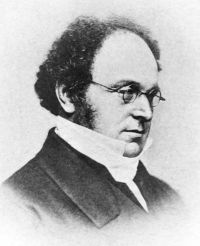 Augustus De Morgan,
A Budget of Paradoxes — 1850-1856
(1872)
Augustus De Morgan,
A Budget of Paradoxes — 1850-1856
(1872)
“ It must be remembered that a phonetic system can only be an approximation. The differences of pronunciation existing among educated persons are so great, that, on the phonetic system, different persons ought to spell differently.But the phonetic party have produced something which will immortalize their plan: I mean their shorthand, which has had a fraction of the success it deserves. All who know anything of shorthand must see that nothing but a phonetic system can be worthy of the name: and the system promulgated is skilfully done. ”
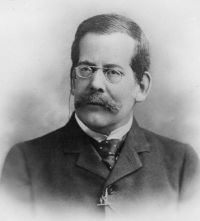 Henry Sweet,
1911 Encyclopædia Britannica
(1911)
Henry Sweet,
1911 Encyclopædia Britannica
(1911)
“ But how the ear transmits to the brain the impression of sound is still a mystery. Again, although the mechanism of the vowel is clear enough, there is still no generally received acoustic theory of its formation. In fact, from the physical science point of view there is as yet no science of phonetics. The real function of phonetics is philological and literary. The only sound basis of a theoretical knowledge of phonetics is the practical mastery of a limited number of sounds—that is to say, of the sounds which are already familiar to the learner in his own language. ”
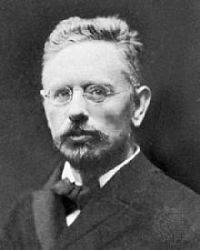 Otto Jespersen,
What is the use of phonetics?
(1910)
Otto Jespersen,
What is the use of phonetics?
(1910)
“ By phonetics is meant the science of speech sounds, their production by means of lips, tongue, palate, and vocal chords, their acoustic qualities, their combination into syllables and other sound groups, and finally quantity, stress and intonation. Phonetics thus may be called that part of linguistic science which deals with the outward aspect of language as opposed to the inner or psychological side of language, or it may be lookt upon as that part of physics and of physiology which deals specially with sounds as used by human beings to communicate thoughts and feelings to one another. ”
