Summary

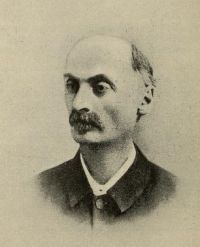
Portrait of A. H. Sayce A. H. Sayce Introduction to the science of language… (1880)

Each advance in philosophy and science is marked by the acquisition of a new idea or fact, the result of a long train of previous observations and reasonings: and the more complex the idea or the fact, the more numerous will be the reasonings, the sentences or judgments, which underlie it. What a multitude of judgments, which when expressed in language we call sentences, are implied by the two simple words humanity and gravitation! It is a truism in psychology that the terms of a proposition, when closely interrogated, turn out to be nothing but abbreviated judgments.
Source: Gutenberg

Portrait of A. H. Sayce A. H. Sayce Introduction to the science of language… (1880)

The circumstances that determine the common nature of a society determine also its common utterance, and this common utterance we call its language. It embodies all the past life and history of the community that speaks it; each phase in the development of its speakers is reflected in it as in a mirror, and its worn-out words and forms are so many crystallized embodiments of dead and bygone thought, so many fossil relics, as it were, of the past strata of social growth. The facts of language—its sentences and its words—are the result of the action of general laws and conditions
Source: Gutenberg

Portrait of A. H. Sayce A. H. Sayce Introduction to the science of language… (1880)

And since a language is the outward expression of the mind and history of a nation, the nation whose language is the most perfect has approached the most nearly to a perfect culture and civilization. Language is at once the most exquisite work of art and the most marvellous creation of science that the spirit and intellect of a people can produce, and its character, as tested by the standard which linguistic science has to establish, is a sure and certain clue to the stage of art and science attained by its speakers.
Source: Gutenberg

Get perspective with Kwize: daily news enlightened by great literature