Summary

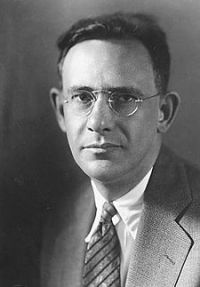
Portrait of Edward Sapir Edward Sapir Language: An Introduction to the Study of Speech

There is perhaps no better way to learn the essential nature of speech than to realize what it is not and what it does not do. Its superficial connections with other historic processes are so close that it needs to be shaken free of them if we are to see it in its own right. Everything that we have so far seen to be true of language points to the fact that it is the most significant and colossal work that the human spirit has evolved—nothing short of a finished form of expression for all communicable experience.
Source: Gutenberg

Portrait of Edward Sapir Edward Sapir Language: An Introduction to the Study of Speech

It is almost as though at some period in the past the unconscious mind of the race had made a hasty inventory of experience, committed itself to a premature classification that allowed of no revision, and saddled the inheritors of its language with a science that they no longer quite believed in nor had the strength to overthrow. Dogma, rigidly prescribed by tradition, stiffens into formalism. Linguistic categories make up a system of surviving dogma—dogma of the unconscious. They are often but half real as concepts; their life tends ever to languish away into form for form’s sake.
Source: Gutenberg

Portrait of Edward Sapir Edward Sapir Language: An Introduction to the Study of Speech

Are we not giving language a power to change of its own accord over and above the involuntary tendency of individuals to vary the norm? And if this drift of language is not merely the familiar set of individual variations seen in vertical perspective, that is historically, instead of horizontally, that is in daily experience, what is it? Language exists only in so far as it is actually used—spoken and heard, written and read.
Source: Gutenberg

Get perspective with Kwize: daily news enlightened by great literature