“ If a young man or woman desires a business or profession, light, pleasant, what is more congenial than stenography? Other occupations are crowded, and the income for years is small. But stenography, on the other hand, is an opening through which one can enter any business or profession with rewards equal to ability and capacity. ”
Stenography
Definition and stakes
Stenography, a method of swift writing employing abbreviated symbols, has long been appreciated for its effectiveness in recording speech and text. Authors such as Stanford Eveleth highlighted its practical value as a career option, while Denis Alphonsus Quinn championed Stenotypy’s advantages over conventional shorthand, emphasizing its adaptability with typewriters.
Willis Duff Piercy pointed out its transformative impact in legal and business environments, noting its prevalence in Anglo-Saxon cultures. These viewpoints together illustrate stenography’s development from a specialized technique to a fundamental element of contemporary administrative and communicative systems, merging technical advancement with practical application.
Quotes about “stenography”
Denis Alphonsus Quinn, Stenotypy: Or, Shorthand by the Typewriter (1895)
“ Whenever a typewriter shall be invented that can easily be carried in the pocket (we hope to see it soon in the market) , indeed, phono and stenography will be universally discarded as obsolete and unworthy of a progressive age. A few of the advantages of Stenotypy are noted on the next two pages. ”
Willis Duff Piercy, Great Inventions and Discoveries
“ Pitman's invention of a phonographic alphabet for shorthand was the beginning of verbatim reporting that has spread to every land which Anglo-Saxon civilization has touched. There is scarcely a legislative body, a court of importance, or a great convention of any kind, whose proceedings are not taken down on the spot in shorthand, accurately and at once, to say nothing of the very wide use of stenography in private business. In this bewildering commercial whirl of the twentieth century time is money, and stenography is time. ”
Various, The Survey, Volume 30, Number 3… (1913)
“ His concern is with means solely, not with ends. If the laboratory develops a way of telling who are fit for stenography and who are not, that does not mean that all the fit should be urged to become stenographers. ”
Various, The Atlantic Monthly, Volume 14…
“ Stenography may yet reach to a degree that it will be able to write folios on the thumb-nail, and dispose all the literature of the world comfortably in a gentleman's pocket, before he sets out on his summer excursion. ”
Denis Alphonsus Quinn, Stenotypy: Or, Shorthand by the Typewriter (1895)
“ In concluding this little treatise, the author begs to state and challenges any reporter in America to gainsay his remarks, that wherever a typewriting machine can be used, Stenotypy surpasses in speed and legibility, every known system of shorthand. Indeed, all forms of manual shorthand must inevitably become obsolete. The trolley does not more excel the old "buss," or bob-tail horse-car, than Stenotypy the impracticable and arduous systems of phonography and stenography. ”
“ The seeds of stenography, which were cast into [Pg 75] our minds at the beginning of our lessons, made their appearance as young and tender shoots when we arrived at the speeding course, and have not only begun to blossom, but also to bear fruit, inasmuch as eight of our number are already holding positions as stenographers and typewriters, and we hope they will soon arrive at full maturity when we have all become experienced shorthand writers. ”
Denis Alphonsus Quinn, Stenotypy: Or, Shorthand by the Typewriter (1895)
“ Stenotypy dispenses with Pitman's awkward use of heavy and light strokes and triple positions, as also Pernin's small, large and larger circles and loops for vowels, and lines and divisions of lines for consonants. As a shorthand writer of thirty years experience, the Author found more difficulty in finding out the position and length of lines or curves than to guess the words in their non-vowel form. In rapid writing it is almost impossible to guide a pen or pencil so that it will distinctly mark vertical, oblique and horizontal half or full lines or curves. ”
Denis Alphonsus Quinn, Stenotypy: Or, Shorthand by the Typewriter (1895)
“ Ksrss; cstion, of Pitman style, are not as legible as the abbreviated form of Stenotypy: xrcs; qstion, meaning exercise, question. In all systems of shorthand the exact positions of signs above, upon and below the line; also, perpendicular and horizontal positions, and half and double length lines must be carefully expressed lest the reading should be rendered impossible. Oftentimes life and property have been jeopardized by the mistaking of a half for a full or a double stroke; or a sign on for a sign above or below the line, Stenotypy can have no letter out of position ”
Denis Alphonsus Quinn, Stenotypy: Or, Shorthand by the Typewriter (1895)
“ A typewriter who can write 60 words a minute can, by using the logograms of Stenotypy, multiply this rate by two and a half (at least) , speeding 150 words a minute, or saving of six out of ten hours' labor. Eighty words a minute (a speed which hundreds of typewriters attain) , would, by Stenotypy, average 200 words per minute–a speed which no living reporter, who writes legibly, can ever reach by any other system. The Stenotyper writes in this rapid way every word, using vowels and consonants that in no other system could be used. ”
C. A. Ealand, The Romance of the Microscope
“ These outgrowths, for such they are, vary in position and shape according to the species of fern. An examination, with a pocket lens, will show that these brownish spots consist of minute tufts of knobbed structures, growing from the tissues of the frond. Sometimes the structures are naked, sometimes covered with a membrane. In either case, one or more of the knobbed structures is worth examining under the microscope; we shall then see [110] that it consists of a stalk terminated by a thin walled portion, shaped like a bi-convex lens. ”
“ The "special" tissue is only to be used for the transparency. A safe edge of black paper is required on the transparency, pasted up exactly to the edge of the picture, on the glass side; it comes, sold in strips, gummed, ready for use, about 1⁄4 inch wide; this is required, as the tissue used for the negative resist on the copper plate, which is printed from the transparency, must have a safe edge, shielded from the light, or it will not attach itself to the copper plate, the tissue coming inside half way. ”
W. S. Ward, Popular Science Monthly (1875)
“ If the reader has been able to follow this necessarily brief description, he will readily perceive how, by the use of duplicate stencils, constructed of .any tough substance, the work of engraving, once an art in itself, becomes merely a mechanical process. As the result of experiments, now nearly completed, a form of rubber ink has been devised which, when laid on paper, converts it into a stencil, sufficiently tough to resist the action of the blast. ”
“ Experience here is the only guide, as the light varies as well as the density of the negative and the sensitiveness of the tissue. If one does not have an actinometer, a slip of albumen paper may be used; as soon as the paper has reached the darkest point, which is then called one tint, extend it so that a fresh portion comes out to the light, and so on for the different tints. ”
“ Stencil units are usually large, offering good opportunities for Subordination (page 23) , Symmetry, and Proportion (page 28) . A unit must not only be complete in itself but must harmonize with itself in Repetition (pp. 36, 66) . Stencils may be cut upon thick manila paper which is then coated with shellac; or upon oiled paper. If stencil brushes cannot be obtained one may use a common, round, house-painter's brush, wound with string to within an inch of the end.Colors may be,—oil thinned with turpentine; dyes; or dry colors ground on a slab with water and mucilage. ”
E. J. Bevan, A Text-book of Paper-making
“ Sections of the filaments are prepared by cutting in a microtome, the filaments being previously agglutinated into a stiff bundle by means of any of the usual stiffening solutions, and after drying, embedded in wax in the usual way. Sections of fresh stems and tissues are cut with a “section” razor.Having prepared the objects, their examination under the microscope necessarily divides itself into:— (1) the determination of external features; (2) the diagnosis of chemical composition. The fibres themselves will be individually considered in regard to microscopic features. ”
Otto Henker, 1911 Encyclopædia Britannica (1911)
“ In all microscopes the rays are limited, not in the eyepiece, but in the objective, or before the objective when using a condenser. If the pencils are limited in the objective, the restriction of the pencil proceeding from the object-point is effected by either the front lens itself, by the boundary of a lens lying behind, by a real diaphragm placed between or behind the objective, or by a diaphragm-image. ”
 Alexis Thomson,
Manual of Surgery, Sixth Edition…
(1921)
Alexis Thomson,
Manual of Surgery, Sixth Edition…
(1921)
“ The ignorance of patients regarding the possible lodgment in the tissues of a foreign body--even of considerable size--is remarkable. In such cases the X-rays will reveal the presence of the foreign body if it is sufficiently opaque to cast a shadow. The heavy, lead-containing varieties of glass throw very definite shadows little inferior in sharpness and definition to those of metal ”
John L. Ridgway, The Preparation of Illustrations for Reports of the United States Geological Survey
“ Zinc etching is adapted to the direct reproduction of a pen and ink drawing composed of lines, dots, or solid black areas. On the finished metal plate these lines, dots, and solid areas form the printing surface, and the spaces between them, which have been etched away, represent the white or blank parts of the picture. The process is cheap and is almost universally used for reproducing small drawings designed for text illustrations. It is also well adapted to the reproduction of maps and diagrams measuring in print not more than about 10 by 14 inches. ”
 Arthur B. Reeve,
The Social Gangster
Arthur B. Reeve,
The Social Gangster
“ For instance, a design drawn in a heavy pigment will show through a layer of a less dense pigment, under the influence of the X-ray—just as bones show through flesh. In other words, an ordinary photograph reproduces only the surface of a painting. A radiograph represents all the pigments underneath, also producing effects in proportion to their densities. ”
Arthur B. Reeve,
The Social Gangster
“ So, a radiograph of even a part of a picture shows the layers of pigment that are hidden from the eye and the changes made during the composition of the work. One can easily distinguish the genuine from the spurious copies, for it is absolutely impossible for an imitator to make a copy that will stand the X-ray test. ”
Gideon Algernon Mantell, The Medals of Creation, Volumes 1 and 2
“ The structure of the large, and the forms of the minute scales, may be seen by a common lens, and without preparing the specimens. But for the examination of the intimate organization of scales, teeth, &c. the microscope is required; and the method directed for the investigation of flint (p. 373) should be employed. The scales, portions of the membranes of the air-bladder, stomach, &c. and thin chips of the teeth, rendered temporarily transparent by oil of turpentine, or permanently so by Canada balsam, should be viewed by transmitted light. ”
Edith Allen, Mechanical Devices in the Home
“ Mimeograph and Multigraph. The mimeograph (Fig. 148) is a more complicated device for reproducing duplicates than the hectograph, but more copies may be made at faster speed on this machine and the stencils may be saved for making more copies later. A stencil (tissue paper, usually blue, fastened to a sheet of equal size waxed cardboard) is cut by a typewriter. ”
Denis Alphonsus Quinn, Stenotypy: Or, Shorthand by the Typewriter (1895)
“ It may, at once, be understood that anyone who is expert at the typewriter, will have no difficulty whatever in becoming a speedy Stenotypist. 8. Stenotypy dispenses with the use of text and exercise books, and saves the time (averaging from six to twelve months) necessary to acquire proficiency in shorthand, besides the expenses of a teacher. 9. As no pen wielded by a human hand can compete in speed with an ordinary typewriter, for the same reason can no reporter or penman write as fast as a Stenotypist. Stenotypy is simply shorthand operated by a typewriter. ”
 Henry Faulds,
Dactylography; Or, The Study of Finger-prints
Henry Faulds,
Dactylography; Or, The Study of Finger-prints
“ For those who wish to study dactylography, the apparatus is neither complicated nor expensive. A good pair of compasses, a botanical lens, a school slate or tin plate or porcelain tile, a small pot of fine printer’s ink, and an ink-roller or photographer’s “squeegee” will suffice for most purposes. For the expert who must make fine measurements of enlarged photographs, and perhaps defend them under keen forensic criticism, one or two instruments are required, presently to be described. ”
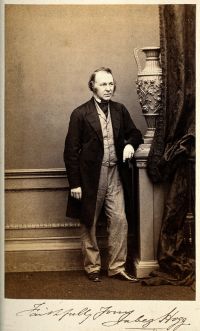 Jabez Hogg,
The Microscope. Its History, Construction…
Jabez Hogg,
The Microscope. Its History, Construction…
“ Fig. 110.—Pan-aplanatic Achromatic Objectives.The Achromatic Objective, of all the optical and mechanical adjuncts to the microscope, is in every way the most necessary, as well as the most important. The ideal of perfection aimed at by the optician is a combination of lenses that shall produce a perfect image—that is, one absolutely perfect in definition and almost free from colour. The method resorted to for the elimination of spherical and chromatic aberration in the lens has been fully explained in a former chapter. ”
J. W. Griffith, An Elementary Text-book of the Microscope
“ XII. fig. 4, parallel rays will be reflected to a focus a, nearer the mirror than the centre of its curvature b, and this focus is called the principal focus; while diverging rays are brought to a focus nearer the centre of curvature; and converging rays form a focus further from the centre of curvature.Lenses.—In most instances, as far as the microscope is concerned, the surfaces of the glass through which the rays of light are transmitted are not plane or flat, but curved-being either convex or concave, and belonging to convex or concave lenses. ”
Edward Arthur Dawe, Paper and Its Uses (1914)
“ Stencil Paper (Oiled) .—Thick strong paper used for cutting stencils for decorators. Manilla or other papers of good strength and substance are soaked in linseed oil, and sometimes varnished on one side. Stencil Papers (Waxed) are used in connection with cyclostyle, mimeograph and similar machines. Thin, strong, unsized papers are coated with wax, and a stencil is actually made by removing the wax in various ways. ”
Jerome Buell Lavay, Disputed Handwriting
“ The higher powers of the microscope are sometimes used to ascertain the character of inks with which the writing is done, and also to determine the character of the paper on which a signature is written, which at times becomes important. For all practical uses of the microscope in the examination of signatures the range of object enlargement occurring between a three-inch and an inch objective will be found to answer the purpose, as the various powers of the lenses become important in making the analysis. ”
R. W. Sindall, The Manufacture of Paper
“ The expansion of papers used for lithography, and the bad register frequently seen in colour work, may be explained by reference to the behaviour of the individual fibres towards moisture. The expansion is usually greater in one direction of the paper than in the direction at right angles to it, and this is due to the fact that fibres have a greater ratio of expansion in the diameter than in the length. ”
Arthur B. Reeve,
The Social Gangster
“ They were peculiar."They are X-ray images or radiographs of two oil paintings, both claimed to be copies of Watteau's famous Fête," explained Kennedy, picking up one of them."In a radiograph of the body," he continued, "the difference of brightness that distinguishes the heart from the lungs, bones from flesh, is due to the different densities of tissues. In these pictures the same effect is produced by the different densities of the pigments, especially of their principal and heaviest elements." ”
Denis Alphonsus Quinn, Stenotypy: Or, Shorthand by the Typewriter (1895)
“ While the phonographic manuscript can be read only by the writer or reporter himself, Stenotypy, being based on the letters of the Alphabet (firmly attached to the machine,) can be read at any time by anyone who understands the language. 6. Whilst scarcely one out of a hundred ever acquires sufficient speed in phonography, the practice of Stenotypy is a pleasant exercise, easily learned, and great speed can be acquired by anyone of ordinary ability. 7. Frequently, the most learned persons are sorry penmen. In Stenotypy nervous and awkward persons are often the fastest typewriters. ”
Edward L. Wilson, The American Carbon Manual (1868)
“ Where extreme smoothness of surface, such as is produced by moulding the tissue on glass, as described, is not of importance; and where greater facility of operation is desired, I apply a thick coating of the tissue-compound to the surface of a sheet of paper. In this case, the paper is merely used as a means of forming, and supporting temporarily, the film produced from the tissue-compound ”
