Summary

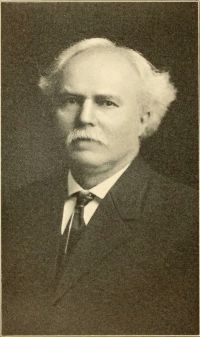
Portrait of Edmund S. Lorenz Edmund S. Lorenz The Singing Church: The Hymns It Wrote and Sang

In so far as a hymn is a transcript of a genuine conviction, intensified by emotion, or of a profound experience, it is literature. There have gone into it vision, feeling, imagination, sincerity, intimate experience—an appropriation of the influences life offers a soul that gazes upon it with wide-open eyes. It is not the measure or the rhyme that makes literature of a hymn. A bald formulation in metrical form of doctrines dissected by metaphysical processes may be called a hymn by courtesy, but it is not literature any more than would be a textbook on mathematics.
Source: Gutenberg

Portrait of Edmund S. Lorenz Edmund S. Lorenz The Singing Church: The Hymns It Wrote and Sang

Are they careless or irreverent in mood as they gather: can he sober their minds and awe their souls with a consciousness of God’s actual presence with a solemn hymn and its impressive tune? How shall he use the singing of the hymns to affect and win the unsaved whom he plans to invite to accept Jesus Christ as Saviour and Master? In a thousand ways the intelligent and adroit minister can make his hymns count largely in accomplishing his beneficent purposes.
Source: Gutenberg

Portrait of Edmund S. Lorenz Edmund S. Lorenz The Singing Church: The Hymns It Wrote and Sang

They trace the religious life of every man as he travels from the City of Destruction to the Celestial City. They unfold the spiritual drama of man, his hopes and fears, his aspirations and affections, his failures and victories; each chequered experience trembles into songs, and scarcely a note is missing. Springing from the heart of the eighteenth century, their music seems to drown its licentiousness and frivolity in paeans of praise.” (Frederick J. Gillman, in The Evolution of the English Hymn.)
Source: Gutenberg

Get perspective with Kwize: daily news enlightened by great literature