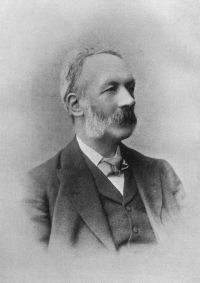
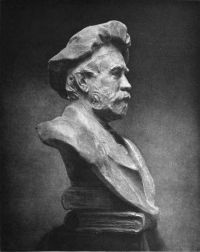
John Henry Hessels, John Southward, and Hugh Munro Ross

Biographical details

John Henry Hessels, John Southward, and Hugh Munro Ross 1911 Encyclopædia Britannica (1911)

After having done justice, we hope, to these latest theories, which, in spite of their great length, leave many things unexplained, it is a pleasure to read once more Junius's unvarnished account of the Haarlem tradition, which contains no intricate theories, but a simple explanation of the rise and progress of printing with movable (metal) types in that city. The reading of it shows that real facts can be explained in a few words, while theories require long explanations, first for explaining away the real facts, and then for explaining the theories, which after all lead us astray.
Source: Wikisource

John Henry Hessels, John Southward, and Hugh Munro Ross 1911 Encyclopædia Britannica (1911)

But why should a printer use an old, quaint-looking type for printing and reprinting, with differences, one sheet for a book which he had printed entirely with a new and better type employed for many other works? We rather assume that the leaves are the remains of a complete (the second Dutch?) edition in Speculum type 2 and were used on this occasion as substitutes for the two corresponding leaves of the third edition, which had become defective or momentarily unavailable.
Source: Wikisource

John Henry Hessels, John Southward, and Hugh Munro Ross 1911 Encyclopædia Britannica (1911)

In the same year a Gutenberg Museum was erected at Mainz to be a repository for anything connected with Gutenberg and printing; also a Society (Gutenberg-Gesellschaft) founded with the view of publishing any book that related, however remotely, to Gutenberg and his invention, to which the whole civilized world was invited to subscribe, as its object was to honour the genius who had conferred such an inestimable boon on mankind by his invention.
Source: Wikisource

Get perspective with Kwize: daily news enlightened by great literature