Engraving

Definition and stakes

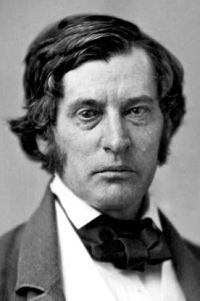
Portrait of John Ruskin John Ruskin Ariadne Florentina: Six Lectures on Wood and Metal Engraving

I shall speak only of wood and metal engraving. But there is one circumstance in stone engraving which it is necessary to observe in connection with the other two branches of the art.
The great difficulty for a primitive engraver is to make his scratch deep enough to be visible. Visibility is quite as essential to your fame as permanence; and if you have only your furrow to depend on, the engraved tablet, at certain times of day, will be illegible, and passed without notice.
Source: Gutenberg

Joseph Kirkbride Engraving for Illustration: Historical and Practical Notes

CHAPTER III METAL ENGRAVING—THE INVENTION—EARLY ENGRAVERS—NATIONAL CHARACTERISTICS—A PROGRESSIVE REVIEW
"The influence of the graver is so great and extensive that its productions have constantly been the delight of all countries of the world and of all seasons of life."
Metal Engraving—The Invention.—The engraving of metal plates for pictorial reproduction was a direct development of ornamental engraving. The Italian Niello work of the fourteenth and fifteenth centuries was chiefly applied to the embellishment of metal ornaments and utensils with elaborate engravings.
Source: Gutenberg

Alan Summerly Cole 1911 Encyclopædia Britannica (1911)

Roughly speaking, the operation of engraving is performed by three different methods, viz. (1) By hand with a graver which cuts the metal away; (2) by etching, in which the pattern is dissolved out in nitric acid; and (3) by machine, in which the pattern is simply indented.
(1) Engraving by hand is the oldest and most obvious method of engraving, but is the least used at the present time on account of its slowness. The design is transferred to the roller from an oil colour tracing and then merely cut out with a steel graver, prismatic in section, and sharpened to a bevelled point.
Source: Wikisource

Get perspective with Kwize: daily news enlightened by great literature