Summary

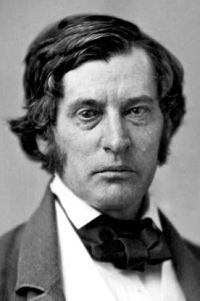
Portrait of Charles Sumner Charles Sumner The Best Portraits in Engraving

Much that belongs to the painter belongs also to the engraver, who must have the same knowledge of contours, the same power of expression, the same sense of beauty, and the same ability in drawing with sureness of sight as if, according to Michael Angelo, he had "a pair of compasses in his eyes." These qualities in a high degree make the artist, whether painter or engraver, naturally excelling in portraits. But choice portraits are less numerous in engraving than in painting, for the reason, that painting does not always find a successful translator.
Source: Gutenberg

Portrait of Charles Sumner Charles Sumner The Best Portraits in Engraving

Thus does the engraver vindicate his art. But nobody can examine a choice print without feeling that it has a merit of its own different from any picture, and inferior only to a good picture. A work of Raffaelle, or any of the great masters, is better in an engraving of Longhi or Morghen than in any ordinary copy, and would probably cost more in the market. A good engraving is an undoubted work of art, but this cannot be said of many pictures, which, like Peter Pindar's razors, seem made to sell.
Source: Gutenberg

Portrait of Charles Sumner Charles Sumner The Best Portraits in Engraving

In disputing about beauty, we are too often lost in the variety of individual tastes, and yet each person knows when he is touched. In proportion as multitudes are touched, there must be merit. As in music a simple heart-melody is often more effective than any triumph over difficulties, or bravura of manner, so in engraving the sense of the beautiful may prevail over all else, and this is the case with the Pompone, although there are portraits by others showing higher art.
Source: Gutenberg

Get perspective with Kwize: daily news enlightened by great literature