Polisher

Definition and stakes

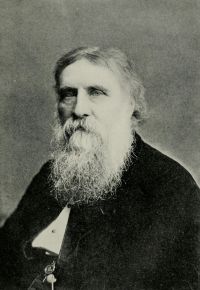
Portrait of Georg Brandes Georg Brandes,  Main Currents in Nineteenth Century Literature - 6…

“ It is the revolt of Poland which is described; Valerius, one of the principal characters in the First Part, is led by his enthusiasm for liberty in general to join the Poles. The subject-matter is interesting, though here and there we have too much of the purely historical. The Poles as a people are described impartially and with a sure touch; their characteristics—the strong patriotic feeling inspiring high and low, the prejudices and tyranny of the nobility, the savagery and vigour of the lower classes—are depicted as they mirror themselves in the mind of the German volunteer. ”
Source: Gutenberg

Georg Morris Cohen Brandes,  Poland: A Study of the Land People and Literature (1903)

“ Everywhere in Europe where there has been any fighting for freedom in this century, the Poles have taken part in it, on all battlefields, on all the barricades. They have sometimes been mistaken in their views of the enterprises to which they lent their arms; but they believed that they were fighting for the good of humanity; they regarded themselves as the bodyguard of freedom, and still look on every one who fights for freedom as a brother.
But conversely, it may also be said that everywhere in Europe where there is any fighting for freedom, there is fighting for Poland.
”
Source: Wikisource

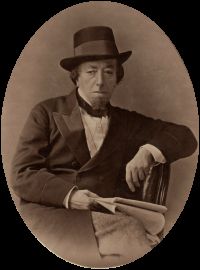
Portrait of Benjamin Disraeli Benjamin Disraeli,  Denmark and Germany (1864)

“ Now, I must observe that what is called the Polish question occupies a different position in France from that which it occupies in England. I will not admit that, in deep sympathy with the Poles, the French are superior to the English people. I believe I am only stating accurately the feelings of this country when I say, that among men of all classes there is no modern event which is looked back to with more regret than the partition of Poland. It is universally acknowledged by them to be one of the darkest pages of the history of the eighteenth century. ”
Source: Wikisource

Get perspective with Kwize: daily news enlightened by great literature