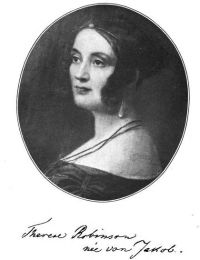
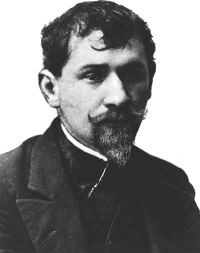
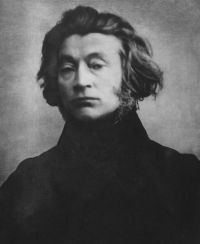
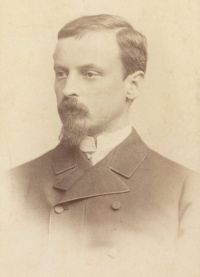
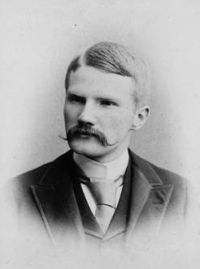
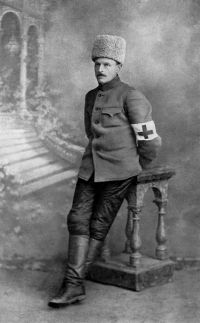
“ But Poland has always beckoned me like a friend—a friend which combined all the poetry, romance, fascination, nobility, and honor of a first love. If the Pole is proud, he has something to be proud of. His honor has dignity. His country’s sorrows touch the heart. Polish literature has sentiment, her music has fire, her men of genius stand out like heroes, her women are adorable. ”
Polish
Definition and stakes
The concept of "polish" encompasses both a physical finish and a metaphorical refinement, reflecting surfaces, cultures, and identities. From the poetic lamentations of Thomas Campbell on Poland’s historical struggles to George MacDonald’s philosophical reflections on polish as a translucent layer revealing inner essence, the theme spans material and symbolic domains.
Authors like Rufin Piotrowski emphasize Poland’s enduring literary spirit, while Donald Trump’s tribute highlights its national soul. Synthesizing these viewpoints, "polish" emerges as both a skill and a cultural heritage, bridging the tangible and the transcendent.
Quotes about “polish”
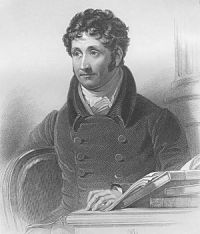
Thomas Campbell,
The Poetical Works of Thomas Campbell
“ The Polish Eagle’s fall is big with fate to man. Proud bird of old! Mohammed’s moon recoiledBefore thy swoop: had we been timely bold,That swoop, still free, had stunned the Russ, and foiledEarth’s new oppressors, as it foiled her old.Now thy majestic eyes are shut and cold:And colder still Polonia’s children findThe sympathetic hands, that we outhold.But, Poles, when we are gone, the world will mind,Ye bore the brunt of fate, and bled for humankind. So hallowedly have ye fulfilled your part,My pride repudiates e’en the sigh that blendsWith Poland’s name—name written on my heart. ”
Various, The American Quarterly Review, No…
“ In the places of many of the old Polish cities, it is said, that dense forests have now sprung up; that the traveller, as he makes his way through their interminable shades, finds the pavement of streets and the relics of deserted towns in the midst of a lifeless solitude. And now, that the sum of evils may be full, the nation of the Poles seems destined to a fall, from which there will be to them no further resurrection.Yet the former history of Poland hardly palliates the position which the sovereigns and states of Europe have assumed towards her. ”
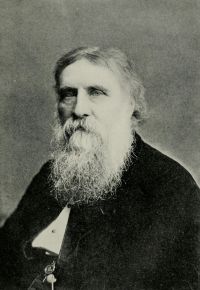
George MacDonald,
A Dish of Orts : Chiefly Papers on the Imagination…
(1893)
“ But how will the figure of material polish aid us any further? How can it be said that Polish of Manners is a revelation of that which is within, a calling up to the surface of the hidden loveliness of the material? For do we not know that courtesy may cover contempt; that smiles themselves may hide hate; that one who will place you at his right hand when in want of your inferior aid, may scarce acknowledge your presence when his necessity has gone by? And how then can polished manners be a revelation of what is within? ”
George MacDonald,
A Dish of Orts : Chiefly Papers on the Imagination…
(1893)
“ For the definition of it appears to us to be, that condition of surface which allows the inner structure of the material to manifest itself. Polish is, as it were, a translucent skin, in which the life of the inorganic comes to the surface, as in the animal skin the animal life. Once clothed in this, the inner glories of the marble rock, of the jasper, of the porphyry, leave the darkness behind, and glow into the day. From the heart of the agate the mossy landscape comes dreaming out. ”
Rufin Piotrowski,
The Story of a Siberian Exile; Followed by a Narrative of Recent Events in Poland
(1863)
“ Then Poland, during the last hundred years, has had a legion of poets, all singularly gifted and inspired, and she still possesses a flourishing and varied literature; for her language has remained, although she has not had the freedom of her schools. Is the love of the past and its traditions required? Then that feeling has been both evident and rampant for the last year. Must there be originality of life and manners? Polish manners have preserved all the savour of their nationality, and, most assuredly, have not been influenced by Russia. ”
“ Looking for an instant at the dramatic contrast and almost ironical relationship of these three backgrounds—Poland, the Sea, the inner security and tradition of an English country-side—one can realise what they may make of an artist. That early Polish atmosphere, viewed through all the deep light and high shade of a remembered childhood, may be enough to give life and vigour to any poet’s temperament. The romantic melancholy born of early years in such an atmosphere might well plant deeply in any soul the ironic contemplation of an impossible freedom. ”
Adam Mickiewicz,
Sonnets from the Crimea
“ It was a resounding, inspired age for his race, and he grew up to take a fitting place in that age and to be called "the immortal hero of Polish poetry." Poland just then was the battle-ground not only for the armies of Europe, but for the diplomats. ”
Monica Mary Gardner, Kościuszko: A Biography (1920)
“ All that the Poles have done since then in the glorious Polish legions and all that they will still do in the future to gain their country back, sufficiently proves that albeit we, the devoted soldiers of that country, are mortal, Poland is immortal. ”
Donald Trump and Melania Trump, Remarks by President Trump to the People of Poland (2017)
“ Poland is the geographic heart of Europe, but more importantly, in the Polish people, we see the soul of Europe. Your nation is great because your spirit is great and your spirit is strong. (Applause.) ”
Georg Morris Cohen Brandes, Poland: A Study of the Land People and Literature (1903)
“ A Polish servant does not kiss his master's hand but his sleeve, and so deeply rooted is this custom of expressing gratitude or affection that I have repeatedly seen young Polish students carry to their lips the arm of a man to whom they wished to show respect. The Poles have not become much more economical under foreign rule than before. ”
George Herbert Walker Bush, Proclamation 6353
“ And from the scientific genius of Copernicus and Madame Curie to the brilliant work of artists such as Chopin and Paderewski, individuals of Polish descent have enriched not just America but the world with a wealth of talent and vision.However, of all the gifts that Poland has given to the world, one of the most valuable and enduring is the example of her people, who have demonstrated extraordinary faith, courage, and resolve in their quest for freedom. Indeed, since the earliest days of our Republic, Americans and Poles have shared an abiding love of liberty and self-government. ”
Monica Mary Gardner, Kościuszko: A Biography (1920)
“ The last moment of Poland, her supreme cause, salvation or eternal ruin and shame, personal freedom and national independence, or a terrible slavery and the groaning of millions of men ... the destruction of the Polish name, or her glorious place in the ranks of nations: these are the considerations that must take hold of the Polish nation, of you, citizens of Lithuania. ... Poles, now is the moment for the amendment of eternal errors. ”
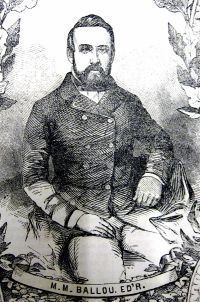
Maturin M. Ballou,
Due North; or, Glimpses of Scandinavia and Russia
“ The Polish language as spoken by the people of Warsaw is indeed a puzzle to a stranger, being a sort of Slavic-Indo-European tongue. When Poland enjoyed a distinctive nationality, no less than six different dialects were spoken in the several provinces of the kingdom. There is so much similarity, however, between the Polish language proper and the Russian tongue that the people of the two nationalities easily understand each other, and on the borders there is a singular conglomerate of the two tongues spoken by the peasantry. ”
George MacDonald,
A Dish of Orts : Chiefly Papers on the Imagination…
(1893)
“ But it is only upon worthless material that polish can be mere smoothness; and where the material is not valuable, polish can be nothing but smoothness. No amount of polish in a style can render the production of value, except there be in it embodied thought thereby revealed; and the labour of the polish is lost. Let us then take the fuller meaning of polish, and see how it will apply to style. If it applies, then Polish of Style will imply the approximately complete revelation of the thought. ”
George T. Ferris, Great Musical Composers: German…
“ Some of his beautiful countrywomen, however, possess precious memorials in the shape of letters written in Polish, which he loved much more than French. His thoughtfulness was continually sending pleasant little gifts and souvenirs to his Warsaw friends. This tenderness and consideration displayed itself too in his love of children. He would spend whole evenings in playing blind-man’s-buff or telling them charming fairy stories from the folk-lore in which Poland is singularly rich. ”
Stanisław Przybyszewski,
Anthology of Modern Slavonic Literature in Prose and Verse
(1919)
“ The polonaise in A flat major is an overwhelming and truly exalted "Danse macabre" of that nation which, ever afresh, was condemned to death, and ever afresh broke the coffin-lid—and this, its magnificent clinging to life, its uniquely stubborn affirmation of life, has nowhere been revealed in Polish art so potently, so grimly, and so majestically as in this heroic dance. ”
Monica Mary Gardner, Kościuszko: A Biography (1920)
“ You who love your country and liberty equally with the valorous nations of the south, you who have been compelled to suffer far more than others oppression and disdain; Poles, who, penetrated with the love of honour and of virtue, can endure no longer the contempt and destruction of the Polish name, who have so courageously risen against despotism and oppression, I conjure you grow not cold ”
Robert N. Bain, David Hannay and William R. Morfill, 1911 Encyclopædia Britannica (1911)
“ We now come to the reign of the last Polish king, Stanislaus Poniatowski, and the few quiet years before the final division of the country, during which the French taste was all powerful. This is the second great period of the development of Polish literature, which has known nothing of medieval romanticism. The literature of the first or Renaissance period gives us some good poets, who although occasionally imitators are not without national feeling, and a goodly array of chroniclers, most of whom made use of Latin. ”
Selected Speeches on British Foreign Policy 1738-1914
“ I will not admit that, in deep sympathy with the Poles, the French are superior to the English people. I believe I am only stating accurately the feelings of this country when I say, that among men of all classes there is no modern event which is looked back to with more regret than the partition of Poland. It is universally acknowledged by them to be one of the darkest pages of the history of the eighteenth century. But in France the Polish question is not a question which merely interests the sentiments of the millions. ”
Henryk Sienkiewicz,
Whirlpools: A Novel of Modern Poland
“ Their consciences have been taken away from them and revolvers are given to them. But the majority--the better and more honest majority--have under the ribs Polish hearts; and for that reason this demon, who wants to snatch and carry them away, called himself, as a bait, Polish. Ah! they only need schools, enlightenment, a knowledge of Polish history, in order not to allow themselves to be hoodwinked! ”
Talvj,
Historical View of the Languages and Literature of the Slavic Nations
“ Of all the Slavic nations, the POLES, as we have already remarked, had most neglected their popular poetry. There were indeed several collections of popular ballads published, partly by Polish editors, with the title of popular poetry in Poland. But they all, without exception, so far as we know, refer to the Ruthenian peasantry in Poland, who use a language different from the Polish, and essentially the same as the Malo-Russian. These tribes, inhabitants of Poland for centuries, may indeed be [pg.395] called Poles with perfect propriety. ”
Talvj,
Historical View of the Languages and Literature of the Slavic Nations
“ History is the great school, in which nations appear as the pupils, experience as the teacher; and the fate of mankind depends on a wise application of the great moral lessons which they daily receive. Most of the Polish historians of this ago preferred however the Latin language; but their productions are too intimately connected with Poland to be separated from its literature, and may, therefore, be named here. ”
Thomas Carlyle, History of Friedrich II of Prussia…
“ Ingenuous readers are invited to try, in their diffuse vague RULHIERES, and unintelligible shrieky Polish Histories, whether this notion does not rise on them as a possible human explanation, more credible than the feline-diabolic one, which needs withal such a foreknowledge, UNattainable by cat or devil? Poland must not rise to be too strong a Country, and turn its back on Russia. ”
Ahad Ha'am,
Ten Essays on Zionism and Judaism
(1922)
“ For the Polish people as a whole this city is certainly a spiritual centre of their nationality. Here the national characteristics find their expression in every department of life, here the national language, literature, and art live and develop; and all this, and what goes with it, influences the spirit of the Poles, binds them, wherever they may be, to the centre, and prevents the spark of nationality in the individual from becoming buried and extinguished. But an economic centre of the nation? ”
Solomon Maimon, Solomon Maimon: An Autobiography
“ The Polish nation, under which I comprehend merely [Pg 81] the Polish nobility, is of a very mixed kind. Only the very few have an opportunity of culture by means of upbringing, instruction, and well-directed travels, by which they can best promote at once their own welfare and that of their tenantry. Most of them, on the other hand, spend their lives in ignorance and immorality, and become the sport of their extravagant passions, which are ruinous to their tenants. ”
Georg Morris Cohen Brandes, Poland: A Study of the Land People and Literature (1903)
“ Although, according to my idea, Polish culture at present must thus be limited to an extremely prudent and wary evolution, it is evident that the year 1863 marks an epoch in the intellectual life of Poland. The follies and horrors of this year, the frantic chaotic rebellion, with its tragic result, has made the nation sober. Too sober, it may seem to some, for while before 1863 it was the wont of the Poles to see all merits united in their own people, since that time it has become the fashion to speak sorrowfully and depreciatingly of Poland. ”
Charles Morris, Historic Tales: The Romance of Reality…
“ For the crime of patriotism Poland was decimated, thousands of its noblest citizens being transported to the Caucasus and Siberia. The remnant of separate existence possessed by Poland was overthrown, and it was made a province of the Russian empire. Even the teaching of the Polish language was forbidden, the youth of the nation being commanded to learn and speak the Russian tongue. As for the persecution and suffering which fell upon the Poles as a nation, it is too sad a story to be here told. There is still a Polish people, but a Poland no more. ”
Nevill Forbes, The Position of the Slavonic Languages at the present day (1910)
“ The fortunes of the Polish language have been very different in each of the three empires under whose political control the Polish nation passed when it was arbitrarily trisected at the tragic culmination of its history as an independent state in the eighteenth century. They have been darkest in Prussia, where the policy of exterminating the Polish nationality has been consistently applied by an incorruptible bureaucracy. ”
Talvj,
Historical View of the Languages and Literature of the Slavic Nations
“ Polish schools; and numerous convents of their own and other orders presented to the scholar an asylum, both when in the year 1241 the Mongols broke into the country, and also during the civil wars which were caused by the family dissensions of Pjast's successors. Several chronicles in Latin were written by Poles long before the history of the Polish literature begins; and Polish noblemen went to Paris, Bologna, and Prague, to study sciences, for the very elements of which their own language afforded them no means. ”
Olive Brown Horne, Stories of Great Musicians
“ Poland was made a part of Russia before Frederick Chopin was born; but the Polish people were hoping that some day they might gain their freedom. The children were taught to love their native land. They learned the songs that their fathers and grandfathers had sung in battle. They were told stories of the brave deeds of Polish soldiers. So it is not strange that every boy and girl in all the land wished to do something toward gaining Poland's freedom. ”
Roman Stanisław Dmowski, Russian Realities and Problems… (1917)
“ Its second great period came in the nineteenth century, after the partitions, when Poland, in the period of Romanticism, produced a poetry which ranks with the greatest in history, but which is unfortunately little known in the West of Europe where only a very few people learn Polish. In spite of most unfavourable conditions this Polish civilisation lives and progresses at the present moment, and contemporary Polish literature and Polish art can by no means be classed with the poorest of Europe. ”
Charles Homer Haskins,
Some Problems of the Peace Conference
(1920)
“ Almost all sides of Polish life today, political, economic, intellectual, and artistic, are described in compendious and scholarly fashion, and with an abundance of maps, statistics, and historical information, in the works published during the War by the Committee for Encyclopaedic Publications on Poland. ”