Capsule

Definition and stakes

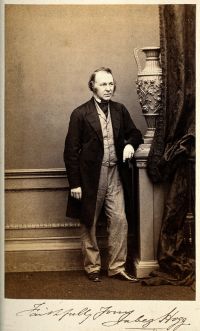
Portrait of Ernst Haeckel Ernst Haeckel,  Report on the Radiolaria (1887)

“ The Central Capsule is originally monaxon (ovoid or spheroidal) and retains this ground-form in most of the species. (2) The Membrane of the central capsule possesses a single large principal aperture (osculum) at the basal pole of the vertical main axis. (3) The Pseudopodia radiate from a stream of sarcode which passes out from the central capsule only on one side, namely, through the principal aperture. (4) The Equilibrium of the floating body is monostatic or unistable, since the two poles of the principal axis are always more or less different from each other. ”
Source: Wikisource

Asa Gray,  The Elements of Botany, For Beginners and For Schools

“ The Capsule, the dry and dehiscent fruit of any compound pistil. The capsule may discharge its seeds through chinks or pores, as in the [Pg 123] Poppy, or burst irregularly in some part, as in Lobelia and the Snapdragon; but commonly it splits open (or is dehiscent) lengthwise into regular pieces, called Valves.
Fig. 395. Capsule of Iris, with loculicidal dehiscence; below, cut across.
Fig. 396. Pod of a Marsh St. John's-wort, with septicidal dehiscence.
371. Regular Dehiscence in a capsule takes place in two ways, which are best illustrated in pods of two or three cells.
”
Source: Gutenberg

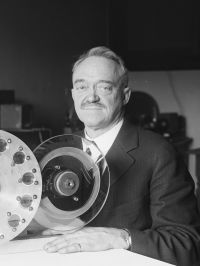
Portrait of C. Francis Jenkins C. Francis Jenkins,  Vision by radio, radio photographs… (1925)

“ The electron stream from the outside cylinder to the capsule naturally takes the long path, and as the longest path is down into the capsule, the result is that the small central opening of the capsule glows with great intensity while the other parts of the lamp remain dark. This lamp, Professor Moore advises, has a light and dark frequency of a million per second. ”
Source: Gutenberg

Get perspective with Kwize: daily news enlightened by great literature