Calymma

Definition and stakes

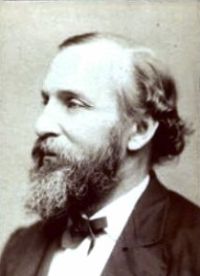
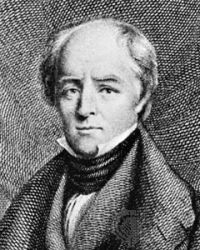
Portrait of Ernst Haeckel Ernst Haeckel,  Report on the Radiolaria Collected by H.M.S. Challenger During the Years 1873-1876…

“ In the centre is visible the large, spheroidal, tripylean central capsule, with its three openings, containing a large nucleus with numerous nucleoli. Its oral half is covered with the dark phæodium. The voluminous spherical calymma contains numerous globular alveoles and its surface is covered with scattered, stirrup-shaped pieces of the skeleton. Numerous free pseudopodia arise from the surface. ”
Source: Gutenberg

Portrait of Ernst Haeckel Ernst Haeckel,  Report on the Radiolaria Collected by H.M.S. Challenger During the Years 1873-1876…

“ Cœlodendrum cervicorne, n. sp., × 150 1736 One valve of the shell, with its galea and the four tubes arising from it. A network of protoplasm connects the distal branches. Fig. 9. Cœlodrymus ancoratus, n. sp., × 50 1738 A complete specimen, with the central capsule and the enveloping phæodium. The surface of the spherical calymma is covered by a dense network, from which arise numerous, anchor-bearing, radial tubules. ”
Source: Gutenberg

Portrait of Ernst Haeckel Ernst Haeckel,  Report on the Radiolaria Collected by H.M.S. Challenger During the Years 1873-1876…

“ The spicula are scattered throughout the alveolate calymma. Fig. 2. Thalassoplancta brevispicula, n. sp. (vel Lampoxanthium brevispiculum) , × 120 36 The central capsule contains numerous clear vacuoles, and in the cortical zone a layer of large oil-globules. The central nucleus includes numerous dark nucleoli. The calymma is alveolate. The spicula lie only in the cortical zone. Fig. 3. Thalassoxanthium cervicorne, n. sp., × 300 33 The central capsule is filled up by clear vacuoles and contains a large central nucleus, with a single nucleolus. The spicula surround the thin calymma. ”
Source: Gutenberg

Get perspective with Kwize: daily news enlightened by great literature