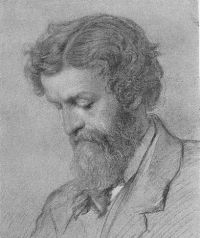
Charles Thomas Newton

Charles Thomas Newton

Summary

Portrait of Charles Thomas Newton Charles Thomas Newton Travels and Discoveries in the Levant (1865)

At this season Rhodes is arrayed in all the freshness of luxuriant spring. The scenery round the town has a peculiar beauty. The land is formed in a succession of natural terraces down to the sea; in every view the palm-tree is seen against the horizon, reminding the Englishman in what latitude he is, which otherwise might be forgotten, from the extraordinary mildness of the temperature. In every direction I find long and silent lanes, stretching away for miles through the suburbs between high garden-walls, from the top of which ivy and other shrubs hang over in rich profusion.
Source: Wikisource

Portrait of Charles Thomas Newton Charles Thomas Newton Travels and Discoveries in the Levant (1865)

So absorbing indeed is the charm of this first impression, so completely does it fill our imaginations, that we forget for awhile the interest which belongs to Rhodes as the site of one of the great maritime republics of the ancient world, a city celebrated not less for the wisdom of its institutions than for the beauty of its architecture, the perfection of its ports and arsenals, and the strength of its defences by sea and land.
Source: Wikisource

Portrait of Charles Thomas Newton Charles Thomas Newton Travels and Discoveries in the Levant (1865)

No one who has not seen the magnificent outline which bounds the horizon of the plain of Troy can bring home to his mind the stirring and marvellous narrative of the poet as Homer meant it to affect his readers or rather hearers. We supply the scenery of the Iliad from our imagination, or, rather, we do not supply it at all; we do not think of the Homeric landscape, on which the Homeric battle-scenes were relieved. The background is blank, like the plane surface on which a Greek frieze was relieved.
Source: Wikisource

Get perspective with Kwize: daily news enlightened by great literature