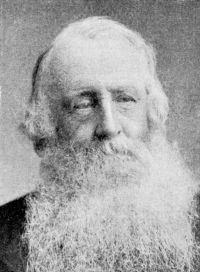
Edward A. Freeman

Edward A. Freeman

Summary

Portrait of Edward A. Freeman Edward A. Freeman Studies of Travel: Greece

The western gulf was the true gulf of Corinth. No other city of equal rank stood on its shore, while its waters formed the highway to the insular and quasi-insular dominion of Corinth on the western seas, to Leukas and Korkyra and long-lived Epidamnos, to Ambrakia, fated to be the capital of Pyrrhos, to mightier and more distant Syracuse, fated to be the capital of whole dynasties of tyrants and kings.
We at last then bid farewell to Athens and Attica; and, in bidding farewell to Athens and Attica, we bid farewell to something more. We pass from one Hellenic world to another.
Source: Gutenberg

Portrait of Edward A. Freeman Edward A. Freeman Studies of Travel: Greece

There is the theatre with its ranges of seats cut deep in the hill-side, a theatre looking out on the wide expanse of city, plain, sea, and mountains. Almost at its foot stands a ruin of the days when Argos formed part of the subject lands of the city by the Tiber, a ruin which bespeaks its kindred with the baths of Antoninus, and shows us in all its boldness the great constructive invention after which men strove at Tiryns, but which Greece, in all other things the mother of arts, had to learn from her Roman masters.
Source: Gutenberg

Portrait of Edward A. Freeman Edward A. Freeman Studies of Travel: Greece

He does not commit himself to the belief that they are the bones of “Agamemnôn,” pure and simple; they are the bones of “Schliemann’s Agamemnôn.” Yet primæval Hellas, primæval Mykênê, has a history which may well live through alike unreasonable doubts and undiscerning faith. Call him what we will—Agamemnôn or anything else—the name matters little. It is a marked moment in one’s life when one looks on the bones of one who, we need not doubt, was, in days long before Hekataios wrote or even before Homer sang, a lord of many islands and of all Argos.
Source: Gutenberg

Get perspective with Kwize: daily news enlightened by great literature