Tiryns

Definition and stakes

Philip Sanford Marden,  Greece and the Ægean Islands

“ Tiryns was at hand and that we were not to close a day already well marked by memories of Cyclopean masonry without adding thereto the most stupendous of all, the memory of the great stones piled up in prehistoric ages at this ancient palace whose size impressed even that hardened sight-seer Pausanias. Tiryns proved to be a highly interesting place; in general appearance much like Mycenæ, but in detail sufficiently different to keep us exclaiming. It lies on what is little more than an isolated hillock beside the highroad, and there is nothing imposing about its height or length. ”

Source: Gutenberg

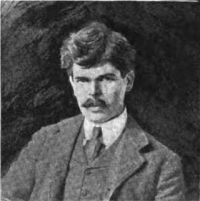
Portrait of Heinrich Schliemann Heinrich Schliemann,  Mycenæ: a narrative of researches and discoveries at Mycenæ and Tiryns

“ Mycenæ itself, as well as Tiryns, Hysiæ, Mideia, and other cities, were forced to increase the power of Argos, and were reduced to the condition of dependent towns. Tiryns remained nevertheless in the hands of its Achæan population, and, together with Mycenæ, took part in the battle of Platææ [7] with 400 men. [40] In consequence of this event the name of Tiryns was engraved, among those of the other Greek cities which had fought there, on the bronze column with the golden tripod-stand, which the Spartans dedicated as the tithe of the booty to the Pythian Apollo at Delphi. ”
Source: Gutenberg

Baron George Gordon Byron Byron,  The Works of Lord Byron: Letters and Journals…

“ The maps of D'Anville are generally more correct than any others where ancient geography is concerned. A mistake occurs on the subject of Tiryns, and a place named by him Vathia, but of which nothing can be understood. It is possible that Vathi, or the profound valley, may be a name sometimes used for the valley of Barbitsa, and that the place named by D'Anville Claustra may be the outlet of that valley called Kleisoura, which has a corresponding signification.
The city of Tiryns is also placed in two different positions, once by its Greek name, and again as Tirynthus.
”
Source: Gutenberg

Get perspective with Kwize: daily news enlightened by great literature