Attica

Definition and stakes

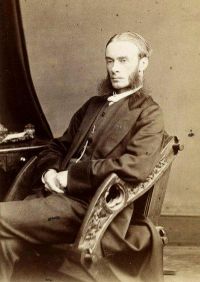
Portrait of Walter Pater Walter Pater,  Greek Studies: a Series of Essays

“ After many wanderings Ceres was come to Attica. There, in the utmost dejection, for the first time, she sat down to rest on a bare stone, which the people of Attica still call the stone of sorrow. For many days she remained there motionless, under the open sky, heedless of the rain and of the frosty moonlight. Places have their fortunes; and what is now the illustrious town of Eleusis was then the field of an old man named Celeus. ”
Source: Gutenberg

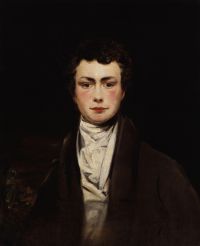
Portrait of Thomas Moore Thomas Moore,  Life of Lord Byron, Vol. 6

“ The beautiful but barren Hymettus, the whole coast of Attica, her hills and mountains, Pentelicus, Anchesmus, Philopappus, &c. &c. are in themselves poetical, and would be so if the name of Athens, of Athenians, and her very ruins, were swept from the earth. But am I to be told that the "nature" of Attica would be more poetical without the "art" of the Acropolis? of the Temple of Theseus? and of the still all Greek and glorious monuments of her exquisitely artificial genius? Ask the traveller what strikes him as most poetical, the Parthenon, or the rock on which it stands? ”
Source: Gutenberg

J. N. Larned,  History for ready reference, Volume 1…

“ See TEN YEARS' WAR. ATTICA. "It forms a rocky peninsula, separated from the mainland by trackless mountains, and jutting so far out into the Eastern Sea that it lay out of the path of the tribes moving from north to south. Hence the migratory passages which agitated the whole of Hellas left Attica untouched, and for this reason Attic history is not divided into such marked epochs as that of Peloponnesus; it possesses a superior unity, and presents an uninterrupted development of coalitions of life native in their origin to the land. ”
Source: Gutenberg

Get perspective with Kwize: daily news enlightened by great literature