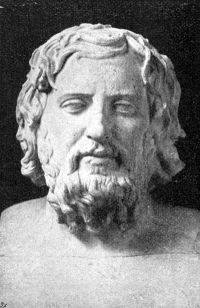
“ The whole of Athens rallied to the rescue at that instant, heavy infantry and cavalry alike, the apprehension being that Piraeus was taken. But the Spartan sent off the captured vessels to Aegina, telling off three or four of his triremes to convoy them thither; with the rest he followed along the coast of Attica, and emerging in seemingly innocent fashion from the harbour, captured a number of fishing smacks, and passage boats laden with passengers crossing to Piraeus from the islands; and finally, on reaching Sunium he captured some merchantmen laden with corn or other merchandise. ”
Piraeus
Definition and stakes
Piraeus, a port city in the Attica region of Greece, has long functioned as a strategic center for commerce, military endeavors, and cultural interaction, located just southwest of Athens. From ancient times to the present day, its role as a maritime gateway has captured the interest of historians, writers, and academics. Xenophon portrayed it as a site of struggle for naval dominance, while James George Frazer emphasized its geographical transformation from an island to a fortified landmass.
Thomas Hodgkin pointed to its symbolic place in narratives of European expansion, and Livy observed its strategic value in Roman-era conflicts. These diverse viewpoints highlight Piraeus’s lasting dual nature as both a practical harbor and a location of historical conflict, illustrating its complex legacy in Greek and wider Mediterranean history.
Quotes about “Piraeus”
 James George Frazer,
Studies in Greek Scenery, Legend and History
James George Frazer,
Studies in Greek Scenery, Legend and History
“ The south-western mass, anciently known as the Acte, rises gradually on all sides to a height of nearly two hundred feet. The north-eastern mass attains a height of nearly three hundred feet in the steep rocky hill of Munychia. The ancients believed that the peninsula of Piraeus had formerly been an island, and that it had received its name because it was the land across (peran) the water. Modern observation confirms the belief that Piraeus was once an island. The peninsula is joined to the mainland by a stretch of low swampy ground, nowhere more than eight feet above the level of the sea. ”
James George Frazer,
Studies in Greek Scenery, Legend and History
“ This remarkable criticism entirely overlooks the fact that between the destruction of Piraeus by Sulla and the time of Pausanias more than two hundred years had elapsed, during the greater part of which Greece had enjoyed profound peace and had been treated with special favour and indulgence by the Roman emperors. Is it beyond the bounds of possibility that during these two centuries the blackened ruins should have been cleared away? that new buildings should have sprung up, and population should have gathered once more around the harbour? ”