Demosthenes

Definition and stakes

John Frederic Dobson,  The Greek orators

“ Aeschines was apparently unmoved by these taunts; but he seems to have been deeply injured when Demosthenes compared him to the Sirens, whose voices charm men to their destruction. His indignation can find no repartee; he can only expostulate that the charge is indecent, and even if it were true, Demosthenes is not a fit man to bring it; only a man of deeds would be a worthy accuser; his rival is nothing but a bundle of words. Here, recovering himself a little, he delivers himself of the idea that Demosthenes is as empty as a flute—no good for anything if you take away the mouthpiece. ”
Source: Gutenberg

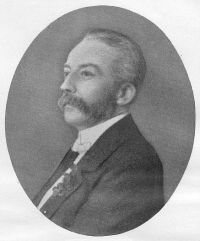
Portrait of Richard Claverhouse Jebb Richard Claverhouse Jebb,  1911 Encyclopædia Britannica, Volume 8… (1911)

“ Demosthenes forbears to amplify. “The people gave their voice, and the danger which hung upon our borders went by like a cloud.” To our modern feeling, the eloquence of Demosthenes exhibits everywhere a general stamp of earnest and simple strength. But it is well to remember the charge made against the style of Demosthenes by a contemporary Greek orator, and the defence offered by the best Greek critic of oratory. Aeschines reproached the diction of Demosthenes with excess of elaboration and adornment (περιεργία) . ”
Source: Wikisource

John Lord,  Beacon Lights of History, Volume 01…

“ Sixty of the great productions of his genius have come down to us.
Demosthenes, like other orators, first became known as the composer of speeches for litigants; but his fame was based on the orations he pronounced in great political emergencies. His rival was Aeschines, who was vastly inferior to Demosthenes, although bold, vigorous, and brilliant. Indeed, the opinions of mankind for two thousand years have been unanimous in ascribing to Demosthenes the highest position as an orator among all the men of ancient and modern times.
”
Source: Gutenberg

Get perspective with Kwize: daily news enlightened by great literature