Phocis

Definition and stakes

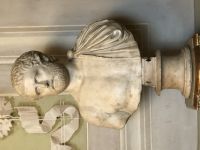
Portrait of John Lemprière John Lemprière,  A classical dictionary (1904)

“ Phocis, a country of Greece, bounded on the east by Bœotia, and by Locris on the west. It originally extended from the bay of Corinth to the sea of Eubœa, and reached on the north as far as Thermopylæ, but its boundaries were afterwards more contracted. Phocis received its name from Phocus, a son of Ornytion, who settled there. The inhabitants were called Phocenses, and from thence the epithet of Phocicus was formed. Parnassus was the most celebrated of the mountains of Phocis, and Delphi was the greatest of its towns. ”
Source: Gutenberg

Portrait of Sophocles Sophocles,  The Seven Plays in English Verse

“ To punish home the murderers of my sire,
Had word from Phoebus which you straight shall hear:
‘No shielded host, but thine own craft, O King!
The righteous death-blow to thine arm shall bring.’
Then, since the will of Heaven is so revealed,
Go thou within, when Opportunity
Shall marshal thee the way, and gathering all
Their business, bring us certain cognizance.
Age and long absence are a safe disguise;
They never will suspect thee who thou art.
And let thy tale be that another land,
Phocis, hath sent thee forth, and Phanoteus,
Than whom they have no mightier help in war.
”
Source: Gutenberg

Maximilian Otto Bismarck Caspari,  1911 Encyclopædia Britannica (1911)

“ The early history of Phocis remains quite obscure. From the scanty notices of Greek legend it may be gathered that an influx of tribes from the north contributed largely to its population, which was reckoned as Aeolic. It is probable that the country was originally of greater extent, for there was a tradition that the Phocians once owned a strip of land round Daphnus on the sea opposite Euboea, and carried their frontier to Thermopylae; in addition, in early days they controlled the great sanctuary of Delphi. ”
Source: Wikisource

Get perspective with Kwize: daily news enlightened by great literature