Macedon

Definition and stakes

J. N. Larned,  History for ready reference, Volumes 1 to 5 (1895)

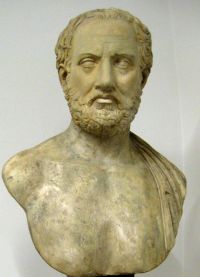
“ To him Macedon was assuredly not wholly barbarian; and war to the death with her kings could not have been to him as natural or desirable as it seemed to Demosthenes. And though he has nothing to tell us of Macedon, we can hardly avoid the conclusion that his desire was for peace and internal reform, even if it were under the guarantee of the northern power. ... ”
Source: Gutenberg

Charles Bucke,  Ruins of Ancient Cities (Vol. 2 of 2…

“ Pella was the capital of the kings of Macedon. There Philip lived and reigned, and here Alexander was born. After his death the kingdom of Macedon frequently changed masters. Philip Aridæus was succeeded by Cassander, who left three sons. Philip, the eldest, died presently after his father. The other two contended for the crown, without enjoying it; both dying soon after without issue.
Demetrius Poliorcetes, Pyrrhus, and Lysimachus, made themselves masters of all, or the greatest part of Macedonia, sometimes in conjunction, and at other times separately.
”
Source: Gutenberg

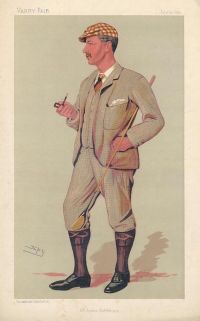
Portrait of Horace G. Hutchinson Horace G. Hutchinson,  The greatest story in the world…

“ The country of Macedon, as you will see on the Greek map, lies northward of Greece. It was inhabited by tribes of the Slavs, or Slavonic people, who lived the agricultural and pastoral life, tilling the soil and having flocks and herds. About 100 years after the battle of Salamis, a baby was born of the royal house of Macedonia. He was given the name of Philip. His childhood was spent at Thebes, in Greece, where he had been sent, or had been taken, as a hostage. When he came to the throne of Macedon he seems at once to have begun to strengthen the army, and to improve its organisation. ”
Source: Gutenberg

Get perspective with Kwize: daily news enlightened by great literature