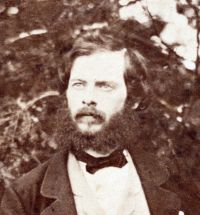
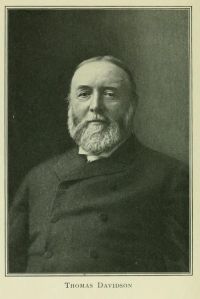
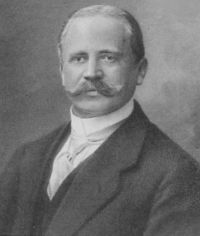
Hyperides

Definition and stakes

John Frederic Dobson,  The Greek orators

“ He is well equipped with intelligence, and is full of charm; he seems simple, but is no stranger to cleverness.’ [440]
The first sentence contrasts Hyperides once for all with his contemporary Lycurgus, who, while less sure of his aim, has a personal dignity which gives exaltation to every theme.
We have hardly enough of the work of Hyperides to enable us to form a first-hand judgment as to the merits of his diction compared with that of Lysias. He has, indeed, the same simplicity and naturalness, but hardly, so far as we can judge, the same felicity of expression.
”
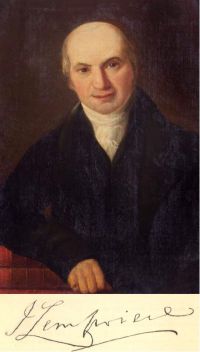
Source: Gutenberg

of Naucratis Athenaeus,  The Deipnosophists; or, Banquet of the Learned of Athenæus…

“ But Hyperides the orator, having driven his son Glaucippus out of his house, received into it that most extravagant courtesan Myrrhina, and kept her in the city; and he also kept Aristagora in the Piræus, and Phila at Eleusis, whom he bought for a very large sum, and then emancipated; and after that he made her his housekeeper, as Idomeneus relates. But, in his oration in defence of Phryne, Hyperides confesses that he is in love with the woman; and yet, before he had got cured of that love, he introduced the above-mentioned Myrrhina into his house. ”
Source: Gutenberg

of Samosata Lucian,  The Works of Lucian of Samosata…

“ You think there is no more in the finding of Demosthenes than in the hunting down such scoundrels as Himeraeus or Aristonicus or Eucrates; these are like swollen torrents—mean fellows in themselves, to whom a passing storm gives brief importance; they make a brave show while the disturbance lasts; but they are as sure to vanish soon as the wind to fall at evening. The recreant Hyperides is another—a selfish demagogue, who took no shame to curry favour with the mob by libelling Demosthenes, and make himself its instrument for ends that his dupes soon wished they had never attained ”
Source: Gutenberg

Get perspective with Kwize: daily news enlightened by great literature