Chimera

Definition and stakes

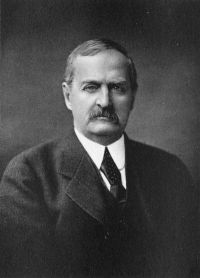
Portrait of Louis Couperus Louis Couperus,  Psyche (1908)

“ Are these the fore-spheres of the farthest sphere . . . .? Is that the way through circles to . . . . the . . . .? Chimera, I see forms, I see the people of light!! O Chimera! Chimera!! They are beckoning us, they are waving to us! I see two of them: a form of majesty, and another, near him, of love! O Chimera! I know them!! That is my father, and that . . . . O joy, O joy! . . . . that is Eros! Eros! Quicker, Chimera annihilate the space which separates us; speed on, ply your wings faster away, away! Oh, faster, Chimera! Can you not go faster? You fly too slowly for me! You fly too slowly!! ”
Source: Wikisource

Chambers's Twentieth Century Dictionary…

“ Chimer, shim′er, Chimere, shi-mēr, n. the upper robe worn by a bishop, to which lawn sleeves are attached. [O. Fr. chamarre; Sp. zamarra, chamarra, sheepskin.]
Chimera, Chimæra, ki-mē′ra, n. a fabulous, fire-spouting monster, with a lion's head, a serpent's tail, and a goat's body: any idle or wild fancy: a picture of an animal having its parts made up of various animals: a genus of cartilaginous fishes, often ranked along with the sharks and rays.—adjs. Chimer′ic, -al, of the nature of a chimera: wild: fanciful.—adv.
”
Source: Gutenberg

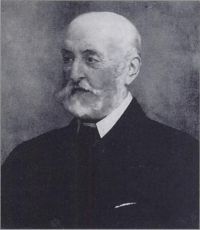
Portrait of John Milton John Milton,  Milton's Comus

“ The Chimera was a fire-breathing monster, with the head of a lion, the tail of a dragon, and the body of a goat. It was slain by Bellerophon. As a common name ‘chimera’ is used by Milton to denote a terrible monster, and is now current (in an age which rejects such fabulous creatures) in the sense of a wild fancy; hence the adj. chimerical = wild or fanciful. enchanted isles, e.g. those of Circe and Calypso, mentioned in the Odyssey. ”
Source: Gutenberg

Get perspective with Kwize: daily news enlightened by great literature