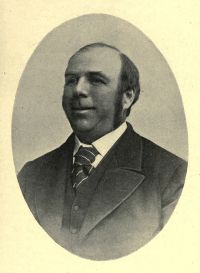
“ When our planet shall have ceased to live, and the last human family shall have fallen asleep on the brink of the last lagoon of the frozen ocean, numberless suns will still shine in the infinite, there will still be mornings and evenings, spring-time and flowers, hopes and joys, other suns, other earths, other humanities,—boundless space, peopled with tombs and cradles. But life, thought, eternal progress, are the final object of creation."The earth is a star's satellite. Now, as well as in the future, we are citizens of the sky; whether we know it or not, we are really living in the stars." ”
Camille Flammarion
Biographical details

Camille Flammarion (1842–1925), a French astronomer and prolific writer, combined scientific research with speculative fiction and spiritual inquiry. His works, such as Lumen, Urania, and Astronomy for Amateurs, explored cosmic enigmas, alien life, and the rebirth of souls, reflecting his conviction in humanity’s celestial fate.
A pioneer in making astronomy accessible to the public, Flammarion also examined psychic phenomena, merging meticulous observation with creative conjecture. His legacy lies in connecting empirical science with metaphysical awe, leaving a lasting impact on both scientific understanding and literary creativity.
Quotes by Camille Flammarion
 Camille Flammarion,
Astronomy for Amateurs
Camille Flammarion,
Astronomy for Amateurs
“ From the bottom of the seas, from the valleys to the mountains, from the vegetation that carpets the soil, from the mold in the fields and woods, from the air we breathe, arises an immense, prodigious, and perpetual murmur. Listen! it is the great voice of Nature, the sum of all the unknown and mysterious voices that are forever calling to us, from the ocean waves, from the forest winds, from the 300,000 kinds of insects that are redundant everywhere, and make a lively community on the surface of our globe. A drop of water contains thousands of curious and agile creatures. ”
Camille Flammarion,
Dreams of an astronomer
(1923)
“ Until the age of truth inaugurated by the conquests of modern astronomy, nobody on our planet, no poet, no philosopher, no thinker, had guessed the real grandeur of the proportions on which the universe is constructed. How small our Earth appears seen from the Saturnian system! It is barely seen, once in six months, as a small luminous dot near the sun, shining for a few minutes in the evening after sunset, or a few minutes in the morning before sunrise. ”