“ When your ship has traversed the waters of Oceanus, you will reach the fertile shore of Proserpine’s country with its groves of tall poplars and willows that shed their fruit untimely; here beach your ship upon the shore of Oceanus, and go straight on to the dark abode of Hades. ”
Oceanus
Definition and stakes
Oceanus, a primordial deity in Greek mythology, represents the vast world-ocean and functions as a symbolic link between heaven and earth. From Hesiod’s Theogony to Jules Verne’s All Around the Moon, writers have portrayed him both as a tangible force of nature and as a metaphor for existential challenges. Homer depicts him as a boundary between the mortal and divine realms, while E.M.
Berens connects him to ancient cosmology, seeing him as an embodiment of nature’s unity. Encyclopedic sources emphasize his role as a kind, human-like figure, honored in myth and art. These diverse depictions highlight Oceanus as an enduring symbol of interconnectedness, reflecting humanity’s continuous engagement with the natural world.
Quotes about “Oceanus”
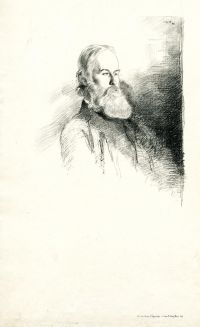 Arthur Sidgwick,
1911 Encyclopædia Britannica
(1911)
Arthur Sidgwick,
1911 Encyclopædia Britannica
(1911)
“ Oceanus, the well-meaning palavering old mentor, and Hermes, the blustering and futile jack-in-office, gods though they be, are vigorous, audacious and very human character-sketches; the soft entrance of the consoling nymphs is unspeakably beautiful ”
E. M. Berens, Myths and Legends of Ancient Greece and Rome
“ The ocean is formed from the rains which descend from heaven and the streams which flow from earth. By making Oceanus therefore the offspring of Uranus and Gæa, the ancients, if we take this notion in its literal sense, merely assert that the ocean is produced by the combined influence of heaven and earth, whilst at the same time their fervid and poetical imagination led them to see in this, as in all manifestations of the powers of nature, an actual, tangible divinity. ”
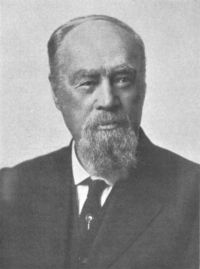 George P. Upton,
The Standard Cantatas: Their Stories…
George P. Upton,
The Standard Cantatas: Their Stories…
“ The daughters of Oceanus approach,”—introduce the opening chorus of sea-nymphs (“Prometheus, Woe to thee”) , for female voices, arranged in double parts, and set to a restless, agitated accompaniment, expressive of fear and despair. The second prologue, reciting the wrath [219] of Oceanus “on his swift-winged ocean steed,” that mortals should have dared to vex his peaceful waters, and the reply of Prometheus that “on the broad earth each place is free to all,” introduces the choruses of Tritons and Oceanides. ”
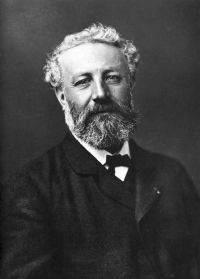 Jules Verne,
All Around the Moon
Jules Verne,
All Around the Moon
“ Around all, embracing all, lies Oceanus Procellarum, the Ocean of Tempests, where, engaged in one continuous struggle with the gusty whirlwinds, excited by our own passions or those of others, so few of us escape shipwreck. ”
Various, Heathen mythology, Illustrated by extracts from the most celebrated writers…
“ He is represented as an old man, with a long, flowing beard, and sitting upon the waves of the sea. He often holds a pike in his hand, whilst ships under sail appear at a distance, or a sea monster stands near him. {139}Oceanus presided over every part of the sea, and even the rivers were subjected to his power. The ancients were very reverential in their homage to Oceanus, and worshipped with great solemnity a deity, to whose care they entrusted themselves when going on any voyage. ”
1911 Encyclopædia Britannica (1911)
“ The Ionian geographers looked on the circular disk of the habitable world as surrounded by a mighty stream named Oceanus, the name of the primeval god, father of gods and men, and thus the bond of union between heaven and earth. ”
 William Smith,
Dictionary of Greek and Roman Geography
(1854)
William Smith,
Dictionary of Greek and Roman Geography
(1854)
“ It is found in the Roman writers and in the Greek geographers of the Roman period, sometimes for the whole body of water surrounding the earth, and sometimes with epithets which mark the application of the word to the Atlantic Ocean, which is also called simply Oceanus; while, on the other hand, the epithet Atlanticus is found applied to the Ocean in its wider sense, that is, to the whole body of water surrounding the three continents. ”
1911 Encyclopædia Britannica (1911)
“ In art, Oceanus was represented as an old man of noble presence and benevolent expression, with the horns of an ox and sometimes crab's claws on his head. His attributes are a pitcher, cornucopiae ("horn of plenty") , rushes, marine animals and a sceptre. ”
H. A. Guerber, Myths of Greece and Rome
“ Oceanus and Neptune.The myths of the sea comprise, of course, Oceanus and Neptune (the earth-shaker) , whose name is connected with such words as “potent” and “despot,” and whose “green hair circles all the earth.” We are further informed that he loves the earth (Ceres) , whom he embraces, and that he marries the graceful undulating Amphitrite, whose gliding charms appeal to him. Neptune’s palace is beneath the deep waters near Greece, and he is said to ride about his realm in a swift chariot drawn by golden or white maned steeds. ”
 John Keats,
Keats: Poems Published in 1820
(1909)
John Keats,
Keats: Poems Published in 1820
(1909)
“ In the second book we hear Oceanus and Clymene his daughter tell how both were defeated not by battle or violence, but by the irresistible beauty of their dispossessors; and from this Oceanus deduces 'the eternal law, that first in beauty should be first in might'. He recalls the fact that Saturn himself was not the first ruler, but received his kingdom from his parents, the earth and sky, and he prophesies that progress will continue in the overthrow of Jove by a yet brighter and better order. ”
 Hesiod,
 the Homeric Hymns and Homerica…
(1920)
Hesiod,
Hesiod, the Homeric Hymns and Homerica…
(1920)
“ Atlas, the Shu of Egyptian mythology: cp. note on line 177. ↑ Oceanus is here regarded as a continuous stream enclosing the earth and the seas, and so as flowing back upon himself. ↑ The conception of Oceanus is here different: he has nine streams which encircle the earth and the flow out into the "main" which appears to be the waste of waters on which, according to early Greek and Hebrew cosmology, the disk-like earth floated. ↑ i.e. the threshold is of "native" metal, and not artificial. ↑ According to Homer Typhoeus was overwhelmed by Zeus amongst the Arimi in Cilicia. ”

“ There is a perpetual inhalation and exhalation of the air rising and falling as the waters pass into the depths of the earth and return again, in their course forming lakes and rivers, but never descending below the centre of the earth; for on either side the rivers flowing either way are stopped by a precipice. These rivers are many and mighty, and there are four principal ones, Oceanus, Acheron, Pyriphlegethon, and Cocytus. Oceanus is the river which encircles the earth ”
Hesiod,
Hesiod, the Homeric Hymns, and Homerica
“ Apart from Demeter, lady of the golden sword and glorious fruits, she was playing with the deep-bosomed daughters of Oceanus and gathering flowers over a soft meadow, roses and crocuses and beautiful violets, irises also and hyacinths and the narcissus, which Earth made to grow at the will of Zeus and to please the Host of Many, to be a snare for the bloom-like girl—a marvellous, radiant flower. ”
 Aeschylus,
The Lyrical Dramas of Aeschylus Translated into English Verse
Aeschylus,
The Lyrical Dramas of Aeschylus Translated into English Verse
“ The ancient sea-goddess, sister and wife of Oceanus, daughter of Heaven and Earth. The reader will observe that the mythology of this drama preserves a primeval or, according to our phrase, antediluvian character throughout. The mythic personages are true contemporaries belonging to the most ancient dynasty of the gods. For this reason Ocean appears in a future stage of the play, not Poseidon. Tethys, with the other Titans and Titanesses are enumerated by Hesiod, Theog. ”
William Smith,
Dictionary of Greek and Roman Geography
(1854)
“ Of the geophraphers subsequent to Strabo, Mela states that the inhabited earth is entirely surrounded by the Ocean, from which it receives four seas, one from the N., two from the S., and the fourth from the W. (i. 1) , meaning the same four gulfs which are specified by Strabo (see above) . After describing the shores of the Mediterranean, he proceeds to speak of the sea without the Straits, under the name of Oceanus, as ingens infinitumque pelagus, and he particularly describes the phenomena of the tides ”
William Smith,
Dictionary of Greek and Roman Geography
(1854)
“ Similarly Eratosthenes had spoken of Arabia Felix, as extending S. as far as the Atlantic Sea (μέχρι τόύ Άτλαντικού πελάγους, Strab. xvi, p. 767, where there is no occasion for Letronne's conjectural emendation, Άιβιοπικού, a name also which only occurs in the later geographers) . Of the use of the simple word Oceanus, as the name of the Atlantic Ocean, by writers about Strabo's time, examples are found in Cicero (Leg. Manil. 12) , Sallust (Jug. 18) , Livy (xxiii. 5) , Horace (Carm. iv. 14. 47, 48) , and Virgil (Georg. iv. 382) ”
“ Ὠκέανόν τε μέγαν. The early Greeks regarded the earth as a flat disc, surrounded by a perpetually flowing river called Oceanus: the god of this river was also called Oceanus, and afterwards the name was applied to the Atlantic. Hesiod, Drayton, and Jonson have all applied the epithet ‘great’ to the god Oceanus; in fact, throughout these lines Milton uses what may be called the “permanent epithets” of the various divinities.869. earth-shaking Neptune’s mace, i.e. the trident of Poseidon (Neptune) . Homer calls him ἐννοσίγαιος = earth-shaking: comp. ”
 John Milton,
Milton: Minor Poems
John Milton,
Milton: Minor Poems
“ Earth-shaking is a Homeric epithet of Neptune. The mace of Neptune must be his trident.870. Tethys is wife of Oceanus and mother of the Oceanids. She reared the great goddess Juno, wife of Jupiter. Her pace is suitable to her dignity.871. hoary Nereus. See note on line 835.872. the Carpathian wizard’s hook. Proteus, son of Oceanus and Tethys, herded the sea-calves of Neptune on the island of Carpathus. As a herdsman he bore a crook, or hook. He had the gift of prophecy, and so is called a wizard.873. Scaly Triton’s winding shell. ”
Hannah Blaney Washburn, A winter in retirement (1914)
“ There is no prospect more lovely and attractive to those who were born upon its shores, than that of the Ocean. In the heat and sunshine of a bright summer day, there is a delicious coolness and refreshment in the breezes which float over its waters never to be forgotten by the wanderer from his native home, and even the hollow murmuring of its waves, when presaging an approaching storm, and their wild roar when the tempest is abroad in its fury, is remembered with a sort of pleasure as being the lullaby for many a calm and sound night’s sleep. ”
James Grant, Dick Rodney; or, The Adventures of an Eton Boy
“ The winds were light, and, as usual near the line, there was a tremendous swell upon the ocean, which rose in long and slowly-heaving hills, without foam or ripple—smooth, glassy, and without sound. On a lovely night, when the ocean seemed to sleep in the moonshine, we crossed the equator. The Eugenie was running with the lee clews eased off—i.e., with a flowing sheet—when Father Neptune came on board, and the usual unpleasant pranks were played on those who had never passed the girdle of the world before. ”
W. Maurice Ewing, The Floors of the Ocean: 1. The North Atlantic
“ Could the waters of the Atlantic be drawn off, so as to expose to view this great sea-gash, which separates continents, and extends from the Arctic to the Antarctic, it would present a scene the most rugged, grand, and imposing. The very ribs of the solid earth, with the foundations of the sea, would be brought to light, and we should have presented to us at one view the empty cradle of the ocean.... ”
 Joseph Conrad,
'Twixt Land and Sea
(1912)
Joseph Conrad,
'Twixt Land and Sea
(1912)
“ Thereupon the Neptun, giving up Ternate altogether, steamed north in view of the mountainous coast of Celebes, and then crossing the broad straits took up her station on the low coast of virgin forests, inviolate and mute, in waters phosphorescent at night, deep blue in daytime with gleaming green patches over the submerged reefs. ”
Clyde Furst, The Observations of Professor Maturin
“ The open sea is, of course, familiar to us all, [58] and yet its apparent boundlessness and immeasurable depth are ever new as the most immense thing in our knowledge—the sky belonging rather to the realm of the intangible. Mid-ocean always makes me feel the infinite continuity of time, the omnipresence of natural law, and a stimulus to greater harmony with its workings. Nowhere else are my ‘cosmic emotions’ so stirred. One gets something of the same impression on land wherever one can mark the ceaseless rising, pausing, and falling of the tide, under the mysterious governance of the moon. ”
Curtis Guild, Over the Ocean; or, Sights and Scenes in Foreign Lands
“ The great, vast ocean is something so much beyond anything I ever imagined,—the same vast expanse of dark-blue rolling waves as far as the eye can reach,—day after day, day after day,—the great ship a mere speck, an atom in the vast circle of water,—water everywhere. The very wind sounds differently than on land; a cheerful breeze is like the breath of a giant, and a playful wave will send a dozen hogsheads of water over the lofty bulwarks. ”
Louis Legrand Noble, After Icebergs with a Painter
“ The waves themselves have gone to sleep under the fleecy covering. Old Ocean lazily breathes and dreams. The top-mast, lofty and slim, marks and flourishes on the misty sky, as an idler marks the sand with his cane. Pricked on by our impatience, back and forth we step the deck, about as purposeless as leopards step their cage. They are letting off the steam. It is flowing up from the great fountains, a deep and solemn voice, a grand ventriloquism, that muffles in its breadth and fulness all the smaller sounds, as the mighty roar dampens the noisy dashings of the cataract. ”
Caroline Pridham, Twilight and Dawn; Or, Simple Talks on the Six Days of Creation
“ I have heard that these far-away ocean-depths are very quiet and still—no rolling waves ever break their stillness, and this is proved in a very beautiful way. At the bottom of the Atlantic Ocean, where overhead great billows which seem mountain-high are in ceaseless motion, there lie beds of delicate shells, so small that you need a microscope to see their beauty, yet these shells are unbroken; no storm ever reaches their quiet home ”
 Ernest Ingersoll,
The Book of the Ocean
Ernest Ingersoll,
The Book of the Ocean
“ WAVES, TIDES, AND CURRENTS Now that we have studied the ancient ocean, it is time to study its present characteristics and understand the great and important part it plays in the world.A very striking thing about the ocean is its flatness. Being water, it seeks always to find its level; and we commonly assume that it everywhere does so, and take the sea-level as the standard from which to calculate all heights above or depths below its surface; that is, we assume that every part of the surface of the ocean when calm and at mean tide is exactly the same distance from the center of the globe. ”
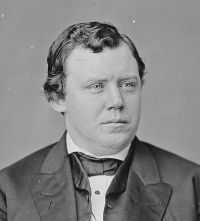 Ignatius Donnelly,
Atlantis: The Antediluvian World
(1882)
Ignatius Donnelly,
Atlantis: The Antediluvian World
(1882)
“ Here, then, we have the backbone of the ancient continent which once occupied the whole of the Atlantic Ocean, and from whose washings Europe and America were constructed; the deepest parts of the ocean, 3500 fathoms deep, represent those portions which sunk first, to wit, the plains to the east and west of the central mountain range; some of the loftiest peaks of this range—the Azores, St. Paul's, Ascension, Tristan d'Acunha—are still above the ocean level; while the great body of Atlantis lies a few hundred fathoms beneath the sea. ”
John Platts, The Book of Curiosities
“ That the tides may have their full motion, the ocean in which they are produced ought to be extended from east to west 90°, or a quarter of a great circle of the earth, at least; because the places where the moon raises most, and most depresses the water, are at that distance from one another. Hence it appears, that it is only in the great oceans that such tides can be produced, and why, in the large Pacific ocean, they exceed those in the Atlantic. ”
Julien Thoulet, Smithsonian Report/1898 (1899)
“ It is ludicrous to hear arguments on the Silurian, the Devonian, or the Carboniferous oceans, now millions of years old, to hear discussions concerning their shores, their waters, or their currents, while we still know so little of our own ocean of to-day, on whose surface our vessels sail, into which we plunge our bodies, over whose immense circumference we are free to cast our gaze, with whose waters we moisten our lips if we wish, whose waves sing their monotonous and majestic harmony in our ears, of which we can take full possession by all our senses. ”
 Jules Michelet,
The Sea (La Mer)
Jules Michelet,
The Sea (La Mer)
“ Oh yes, they both think of it and expect it; those widows of the great Ocean well know that he will return to caress the earth. Anticipatively they look towards the Ocean, and even those which have a fixed abode, turn from the rock and open their shells towards the incoming tide. And if it come in somewhat strongly they are all the more delighted; too happy to hail that living wave that advances so strongly, as in haste to caress them. ”
Chautauqua Institution, The Chautauquan, Vol. 05, November 1884…
“ The circular disc of the earth was crossed from east to west and divided into two equal parts by the “sea,” as they called the Mediterranean, and its continuation, the Euxine.Around the earth flowed the “River Ocean,” its course being from south to north on the western, and in a contrary direction on the eastern side. It flowed in a steady, equable current, as was supposed, unvexed by storm or tempest. The sea and all the rivers on earth received their waters from it. ”