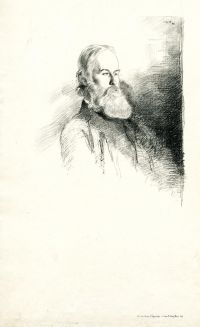
Arthur Sidgwick

Arthur Sidgwick

Summary

Portrait of Arthur Sidgwick Arthur Sidgwick 1911 Encyclopædia Britannica (1911)

The interest still centres round the chorus, who are in fact the “protagonists” of the play. Character and plot—the two essentials of drama, in the view of all critics from Aristotle downwards—are both here rudimentary. There are some fluctuations of hope and fear; but the play is a single situation, The stages are: the appeal; the hesitation of the king, the resolve of the people; the defeat of insolent violence; and the rescue. It should not be forgotten, indeed, that the play is one of a trilogy—an act, therefore, rather than a complete drama.
Source: Wikisource

Portrait of Arthur Sidgwick Arthur Sidgwick 1911 Encyclopædia Britannica (1911)

This is just the opportunity for the poet’s bold inventiveness and fine imagination. The tortured sufferer is visited by the Oceanic Nymphs, who float in, borne by an (imaginary) winged car, to console; Oceanus (riding a griffin, doubtless also imaginary) follows, kind but timid, to advise submission; then appears Io, victim of Zeus’ love and Hera’s jealousy, to whom Prometheus prophesies her future wanderings and his own fate; lastly Hermes, insolent messenger of the gods, who tries in vain to extort Prometheus’ secret knowledge of the future.
Source: Wikisource

Portrait of Arthur Sidgwick Arthur Sidgwick 1911 Encyclopædia Britannica (1911)

However that may be, the play that survives is a poem of unsurpassed force and impressiveness. Nevertheless, from the point of view of the development of drama, there seems at first sight little scope in the story for the normal human interest of a tragedy, since the actors are all divine, except Io, who is a distracted wanderer, victim of Zeus’ cruelty; and between the opening where Prometheus is nailed to the Scythian rock, and the close where the earthquake engulfs the rock, the hero and the chorus, action in the ordinary sense is ipso facto impossible.
Source: Wikisource

Get perspective with Kwize: daily news enlightened by great literature