“ Then, in infinite pity, Prometheus bethought himself of a power belonging to the gods alone and unshared by any living creature on the earth.“We shall give Fire to the Man whom we have made,” he said to Epimethus. To Epimethus this seemed an impossibility, but to Prometheus nothing was impossible. He bided his time and, unseen by the gods, he made his way into Olympus, lighted a hollow torch with a spark from the chariot of the Sun and hastened back to earth with this royal gift to Man. Assuredly no other gift could have brought him more completely the empire that has since been his. ”
Prometheus
Definition and stakes
Prometheus, a Titan in Greek mythology, embodies resistance and self-sacrifice, famous for stealing fire to bestow upon humanity. Authors like Aeschylus depict him as a tormented rebel, bound for challenging Zeus, while Jean Lang focuses on fire's capacity for transformation, providing humans with tools and warmth. Padraic Colum highlights his empathy, imagining fire as a means to alleviate human labor.
Gilbert Murray emphasizes the tragic majesty of Aeschylus’s chorus, portraying Prometheus’s suffering as a universal sorrow. Helen A. Clarke views him as a go-between for mortals and the divine, enduring punishment for questioning the cosmic order. These diverse perspectives together reveal Prometheus as a symbol of unyielding resistance, humanizing the fight against oppressive authority.
Quotes about “Prometheus”
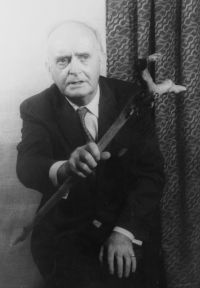 Padraic Colum,
The Golden Fleece and the Heroes Who Lived Before Achilles
Padraic Colum,
The Golden Fleece and the Heroes Who Lived Before Achilles
“ Prometheus, who had saved them, looked on the men and women of the earth with compassion. Their labor was hard, and they wrought much to gain little. They were chilled at night in their houses, and the winds that blew in the daytime made the old men and women bend double like a wheel. Prometheus thought to himself that if men and women had the element that only the gods knew of—the element of fire—they could make for themselves implements for labor; they could build houses that would keep out the chilling winds, and they could warm themselves at the blaze. ”
 Aeschylus,
Prometheus Bound
(1902)
Aeschylus,
Prometheus Bound
(1902)
“ Look now, what lightest parcel of thy pain Can men abate for thee? A name ill-sorting Thou bear'st in Heaven, Prometheus: for thyself Thou hast much need, Provider, to provide,— Some way to get thee from this cunning toil. [Hephaistos, Kratos and Bia depart, leaving Prometheus chained to the rocks, alone.] PROMETHEUS O holy sky! and ye, swift-winged winds! All fountains of all rivers! Thou, that rollest Laughter innumerable of ripple and wave, O Sea, behold me! Mother of all things. Earth, 90 Behold me! Thou, great Sun, that seest all, Bear record what I suffer from my peers. ”

Related terms
Authors who wrote about “Prometheus”
Aeschylus John Henry Wright
 Reginald Copleston
 Josephine Preston PeabodyR. E. Francillon
 Thomas BulfinchVariousJean LangPadraic Colum
 Joyce Kilmer
 Percy Bysshe Shelley
 Florence Holbrook
 Gilbert MurrayHelen A. ClarkeCharles K. DillawayHenry Green
 Henri BarbusseC. G. JungMrs. Bloomfield H. Moore
 James Branch Cabell