Summary

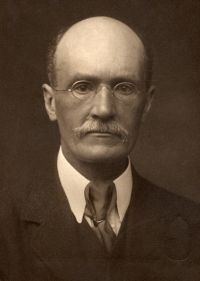
Portrait of Gilbert Murray Gilbert Murray A History of Ancient Greek Literature (1901)

But the sickening dread of Achilles' distant oncoming grows as you wait, till it simply cannot be borne. The man must fly; no one can blame him; it is only one more drop in the cup of divine cruelty, which is to leave Hector dead, Troy burned, Astyanax butchered, and Andromache her enemy's slave. If the old poet went with the conqueror, and exulted in Hector's shame, there has come one after him who takes all his facts and turns them the other way; who feels how far more intense the experience of the conquered always is, and in this case how far more noble.
Source: Wikisource

Portrait of Gilbert Murray Gilbert Murray A History of Ancient Greek Literature (1901)

Some mysticism was always in him from the time of the Hippolytus (l. 192) : "Whatever far-off state there may be that is dearer to man than life, Darkness has it in her arms and hides it in cloud. We are love-sick for this nameless thing that glitters here on the earth, because no man has tasted another life, because the things under us are unrevealed, and we float upon a stream of legend." There is not one play of Euripides in which a critic cannot find serious flaws and offences; though it is true, perhaps, that the worse the critic, the more he will find.
Source: Wikisource

Portrait of Gilbert Murray Gilbert Murray A History of Ancient Greek Literature (1901)

The chorus of the Prometheus is perhaps in character and dramatic fitness the most beautiful and satisfying known to us on the Greek stage. The songs give an expression of Weltschmerz for which it would be hard to find a parallel before the present century. The whole earth is in travail as Prometheus suffers: "There is a cry in the waves of the sea as they fall together, and groaning in the deep; a wail comes up from the cavern realms of Death, and the springs of the holy rivers sob with the anguish of pity."
Source: Wikisource

Get perspective with Kwize: daily news enlightened by great literature