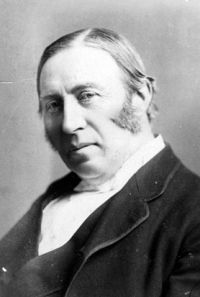
John Pentland Mahaffy

John Pentland Mahaffy

Euripides (1879)

Summary

Portrait of John Pentland Mahaffy John Pentland Mahaffy Euripides (1879)

These are the sort of contrasts which made Greek plays far more different from ours than is apparent at first reading. What we consider delicacy in play of feature, and grace of gesture, must have been impossible under the mask and tragic inflation of the figure which the Greeks thought necessary for its dignity. But of course the less the actor could do, the more the poet must compensate by the real excellence of his dialogue, and the pathos of his scenes. Thus the shackles of an art are often the very causes of its most splendid products.
Source: Wikisource

Portrait of John Pentland Mahaffy John Pentland Mahaffy Euripides (1879)

In the Frogs, the most complete and systematic of all Aristophanes' attacks, the poet's whole moral and social tendencies are discussed in contrast to the tone of Æschylus, and he is represented as the mouthpiece of the vulgar and depraved mob, that ochlocracy which the Germans dislike so much. Thus we may say that no Greek poet ever received more constant and unsparing adverse criticism, and from the ablest possible critic. To have outlived, nay, to have conquered such attacks, is in my mind an astonishing proof of genius.
Source: Wikisource

Portrait of John Pentland Mahaffy John Pentland Mahaffy Euripides (1879)

But in the next generation, when poetic genius had died away, actors became of importance, people began to frequent the theatre, not to see a great play, but a great actor, and then it was that the Medea sprang at once from the third to the first place as an acting piece. For one actor was sufficient to bring out all the power of the play, and nowhere could a great actor find a more grateful subject for his genius than the impersonation of the vehement character and furious passion of the great Colchian princess.
Source: Wikisource

Get perspective with Kwize: daily news enlightened by great literature