Antigone

Definition and stakes

Amelia Gere Mason,  Woman in the Golden Ages — Woman in Greek Poetry (1901)

“ Perhaps Antigone is a trifle too coldly perfect, too faultlessly wise — a tacit reflection upon every- day human nature, that likes its ease, and counts the cost of its renunciations. We look for a trace of weakness, a warm burst of living tenderness. But duty is shy like love, and chary of expression. " I do not love a friend who loves in words," is the cry of her steadfast soul. ”
Source: Wikisource

Mary Sturgeon,  Women of the Classics

“ In Œdipus the King we know her only by name, a child of thirteen into whose sunny life a storm has suddenly crashed. In the Œdipus at Colonus, the strong young spirit has awakened, and is giving clear promise of the heights to which it will soar before its short day is done. While the Antigone, the drama which bears her name, does but fulfil and make perfect what is fair promise in the other plays. ”
Source: Gutenberg

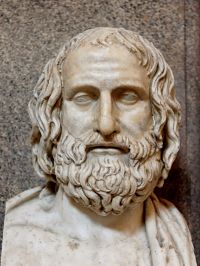
Portrait of Aeschylus Aeschylus,  The Lyrical Dramas of Aeschylus Translated into English Verse

“ Antigone.
When ears are deaf, ’tis wisdom to be dumb.
Herald.
Fierce is a people with young victory flushed.
Antigone.
Fierce let them be; he shall not go unburied.
Herald.
What? wilt thou honour whom the city hates?
Antigone.
And did the gods not honour whom I honour?
Herald.
Once: ere he led the spear against his country.
Antigone.
Evil entreatment he repaid with evil.
Herald.
Should thousands suffer for the fault of one?
Antigone.
Strife is the last of gods to end her tale;
My brother I will bury. Make no more talk.
Herald.
Be wilful, if thou wilt. I counsel wisdom.
Chorus.
”
Source: Gutenberg

Get perspective with Kwize: daily news enlightened by great literature