Polynices

Definition and stakes

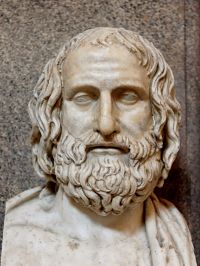
Portrait of Euripides Euripides,  The Tragedies of Euripides, Volume I

“ Eteocles and Polynices in a single combat slew each other, and their mother having found the corses of her sons laid violent hands on herself; and Creon her brother received the kingdom. The Argives defeated in battle retired. But Creon, being morose, would not give up those of the enemy who had fallen at Thebes, for sepulture, and exposed the body of Polynices without burial, and banished Œdipus from his country; in the one instance disregarding the laws of humanity, in the other giving way to passion, nor feeling pity for him after his calamity. ”

Source: Gutenberg

Baron Edward Bulwer Lytton Lytton,  Athens: Its Rise and Fall, Complete

“ But there is in Polynices the appearance of a true penitence, and a mingled gentleness and majesty in his bearing which interests us in his fate despite his faults, and which were possibly intended by Sophocles to give a new interest to the plot of the “Antigone,” composed and exhibited long before. Oedipus is persuaded by the benevolence of Theseus, and the sweet intercession of Antigone, to admit his son. After a chant from the chorus on the ills of old age 351, Polynices enters. He is struck with the wasted and miserable appearance of the old man, and bitterly reproaches his own desertion. ”
Source: Gutenberg

Portrait of Mrs. Jameson Mrs. Jameson,  Characteristics of Women: Moral…

“ When her two brothers, Eteocles and Polynices, had slain each other before the walls of Thebes, Creon issued an edict forbidding the rites of sepulture to Polynices, (as the invader of his country,) and awarding instant death to those who should dare to bury him. We know the importance which the ancients attached to the funeral obsequies, as alone securing their admission into the Elysian fields. ”
Source: Gutenberg

Get perspective with Kwize: daily news enlightened by great literature