Oceania

Definition and stakes

Jewett C. Gilson,  Wealth of the World's Waste Places and Oceania

“ The chief divisions of Oceania are Australasia, Melanesia, Micronesia, and Polynesia. Australia, the largest body of land, is usually regarded as a continent. Nearly all the smaller islands are of coral or of volcanic origin; in many instances both agencies have contributed to their formation. The coral and volcanic islands seem to be the tops of mountain ranges that, little by little, have sunk, until only their higher summits are now above sea level.
The central part of the Pacific Ocean is pre-eminently the home of the reef-building coral.
”
Source: Gutenberg

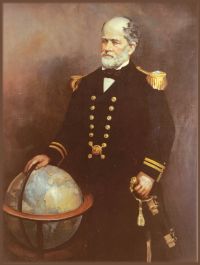
Portrait of Matthew Fontaine Maury Matthew Fontaine Maury,  Maury's New Elements of Geography for Primary and Intermediate Classes (1907)

“ The Inhabitants of Oceania are dark-skinned. Some are Malays, others are Negroes. They are very tine swimmers and boatmen.
The bread-fruit is the principal food on many islands. When baked it is like bread.
10. Principal Islands.'—The largest islands of Oceania are near the continent of Asia, and are often called the East India Islands.
”
Source: Wikisource

Various,  The Book of History (Vol. 1 of 18… (1921)

“ The Pacific widens toward the south; and Australia and Oceania lie in the opening, thus furnishing the Pacific with its most striking peculiarity—a third continent situated in the Southern Hemisphere, together with the richest series of island formations on earth. Whatever the Pacific may contribute to history, it will be a contribution to the annals of the Southern Hemisphere; and if a great independent history develop in the antipodes, it will have the Southern Pacific, bounded by Australia, South America, New Zealand, and Oceania, for its sphere of action. ”
Source: Gutenberg

Get perspective with Kwize: daily news enlightened by great literature