Summary

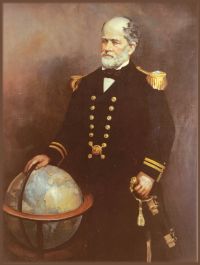
Portrait of Matthew Fontaine Maury Matthew Fontaine Maury Maury's New Elements of Geography for Primary and Intermediate Classes (1907)

The camels rock us almost as if we were in a little boat on the sea. Some of us feel seasick. Soon something even worse than seasickness comes. A dark cloud is driven toward us by the wind. The air is filled with sand and dust. The sun is darkened. We are in a sandstorm.
The camels turn their backs to the wind, kneel down and put their noses close to the ground. We lie down and cover our faces with handkerchiefs. Soon the storm is over. The camels rise, we shake the sand from our clothes, and begin the journey again.
Source: Wikisource

Portrait of Matthew Fontaine Maury Matthew Fontaine Maury Maury's New Elements of Geography for Primary and Intermediate Classes (1907)

One of the strangest things is what we learn about the shape of the earth.
Suppose the earth were flat, and we were to travel on and on in one direction without turning, should we ever come back to the same place from which we started? Of course we should not. If we traveled long enough we should come to the edge of the earth. We should be like an ant walking on a table. If the ant keeps on in one direction all the time, it will reach the edge of the table.
But if the ant walks upon an orange and always goes in the same direction, it will at last come to the place from which it started.
Source: Wikisource

Portrait of Matthew Fontaine Maury Matthew Fontaine Maury Maury's New Elements of Geography for Primary and Intermediate Classes (1907)

Turkey is an empire consisting of many different parts. It is like a body, the head of which is in Europe, the other parts elsewhere.
Turkey is, perhaps, the worst governed country in the world, but the people now have some share in the government. The Emperor is called the Sultan. The land is fertile, but the farming is wretched. In fact, scarcely anything is well done in all the country.
Source: Wikisource

Get perspective with Kwize: daily news enlightened by great literature