“ Looked at in this broad light, the history of man's common life in the world will, I think, show two great streams of progress—the progress of man over Nature, or, as we say to-day, in the control of his environment, and the progress of man in what is essentially a moral task—the art of living together with his fellows. These two aspects of human activity and effort are in constant contact and interaction. ”
Human activity
Definition and stakes
The theme of “human activity” has been addressed by authors such as John Dewey, Nicolas August Ludwig Jacob Johannsen, William Isaac Thomas, Henry K. Rowe and Wilhelm von Humboldt. It is often associated with terms like society, nature, mind, environment and social.
Quotes about “human activity”
Popular Science Monthly (1872)
“ But a little consideration will lead to the conclusion that all this mental activity is but the evidence of human progress in general, and that its root, as well as its most perfect development, is to be found in the domestic life. ”
 Victor Cousin,
Lectures on the true, the beautiful and the good
Victor Cousin,
Lectures on the true, the beautiful and the good
“ The first of these faculties is activity, voluntary and free activity, in which human personality especially appears, and without which the other faculties would be as if they were not, since we should not exist for ourselves. ”
George Gore, The Scientific Basis of National Progress… (1882)
“ It is evident from this, that much of the mental activity around us is not progress, but rather a process of maintaining present state, a prevention of decline, a continually going round and round in conventional varied step, a kind of intellectual mill. ”
 Boris Sidis,
The Source and Aim of Human Progress…
(1919)
Boris Sidis,
The Source and Aim of Human Progress…
(1919)
“ This holds true not only of the material needs, but more especially of the spiritual interests of man. The higher the level of mental activity, the more finite, the more precise, the more rigid the selective process becomes. ”
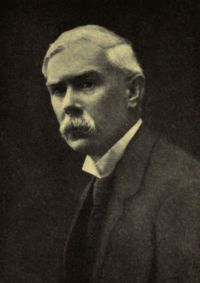 John Arthur Thomson,
The Outline of Science — Part V
John Arthur Thomson,
The Outline of Science — Part V
“ We cannot, however, say more than that the factors of human progress have always had these three aspects, Folk, Place, Work, and that if progress is to continue on stable lines it must always recognise the essential correlation of fitter folk in body and mind: improved habits and functions, alike in work and leisure ”
baron d' Paul Henri Thiry Holbach, The System of Nature, or, the Laws of the Moral and Physical World…
“ Let us, then, good humouredly consult reason, avail ourselves of experience, interrogate nature; we shall, perhaps, find what is requisite to be done, in order to labour efficaciously to the happiness of the human race. ”
William Henry Pyle, The Science of Human Nature: A Psychology for Beginners
“ Definite habits, social, moral, religious, intellectual, professional, etc., will be necessary for efficiency. We should know what these various habits are, and should then set about the work of establishing them with system and determination, just as we would the building of a house. ”
 Elizabeth Blackwell,
Essays in medical sociology, Volume 1…
(1902)
Elizabeth Blackwell,
Essays in medical sociology, Volume 1…
(1902)
“ On the contrary, you form a mighty crusade against intemperance. And how do you go to work? You recognise the absolute necessity which exists in human nature for amusement, social stimulus, refreshment, change, and cheerful hilarity ”
William James, Essays in Radical Empiricism
“ My book raised only the question of which activity deserved the name of ‘ours.’ So far as we are ‘persons,’ and contrasted and opposed to an ‘environment,’ movements in our body figure as our activities ”
 Henry David Thoreau,
Miscellanies
(1893)
Henry David Thoreau,
Miscellanies
(1893)
“ Those things which now most engage the attention of men, as politics and the daily routine, are, it is true, vital functions of human society, but should be unconsciously performed, like the corresponding functions of the physical body. ”
 John Ruskin,
Munera Pulveris
(1894)
John Ruskin,
Munera Pulveris
(1894)
“ The most beautiful actions of the human body, and the highest results of the human intelligence, are conditions, or achievements, of quite unlaborious,—nay, of recreative,—effort. But labour is the suffering in effort. ”
 Herbert Spencer,
First Principles
Herbert Spencer,
First Principles
“ When, again, we speak of moral or intellectual progress, we refer to the state of the individual or people exhibiting it; while, when the progress of Knowledge, of Science, of Art, is commented upon, we have in view certain abstract results of human thought and action. ”
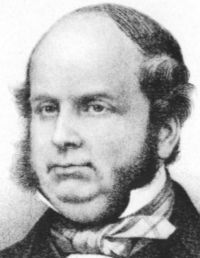 Henry Thomas Buckle,
History of Civilization in England…
Henry Thomas Buckle,
History of Civilization in England…
“ It now remains for me to examine the effect of those other physical agents to which I have given the collective name of Aspects of Nature, and which will be found suggestive of some very wide and comprehensive inquiries into the influence exercised by the external world in predisposing men to certain habits of thought, and thus giving a particular tone to religion, arts, literature, and, in a word, to all the principal manifestations of the human mind. ”
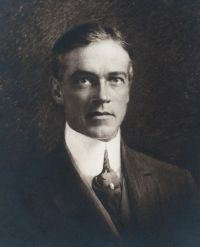 Victor Mapes,
Heart and Soul by Maveric Post
Victor Mapes,
Heart and Soul by Maveric Post
“ Before attempting to speculate on these questions, it might be a good idea to consider for a moment the main, fundamental influences which have always been at work, to a greater or less extent, in determining the conduct of human beings. ”
Sinclair Lewis, The Job : Man and Woman — Chapter 21 (1917)
“ Religion, education, medicine, war, agriculture, art, pleasure, anything—all systems are choked with clumsy, outworn methods and ignorance—the whole human race works and plays at about ten-per-cent. efficiency. ”
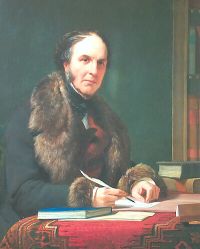 Nassau William Senior,
Four Introductory Lectures on Political Economy
Nassau William Senior,
Four Introductory Lectures on Political Economy
“ These are the physical and the mental, or, as they are sometimes called, the moral sciences. The proper subjects of the first are the properties of matter; those of the second are the sensations, faculties, and habits of the human mind. ”
Herbert Spencer,
Popular Science Monthly
(1873)
“ To prescribe for society on the strength of countless unclassified observations, appears to him a sensible course; but, to colligate and systematize the observations so as to educe tendencies of human behavior displayed throughout cases of numerous kinds, to trace these tendencies to their sources in the mental natures of men, and thence to draw conclusions for guidance, appears to him a visionary course. ”
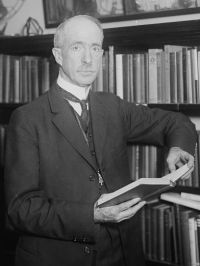 Sidney Lewis Gulick,
Evolution Of The Japanese, Social And Psychic
Sidney Lewis Gulick,
Evolution Of The Japanese, Social And Psychic
“ In other words, the method of human progress consists, in no small degree, in the progressive mastery of nature, first through understanding her and then through the use of her immense forces by means of suitable mechanisms. ”
W. Mattieu Williams, The Chemistry of Cookery
“ My reasons for this introductory digression will be easily understood, as this view of the doings of man and the doings of Nature displays fundamentally the business of human education, so far as the physical proceedings and physical welfare of mankind are concerned. ”
 George Santayana,
Reason in Common Sense
(1920, 1905)
George Santayana,
Reason in Common Sense
(1920, 1905)
“ In which of its adventures would the human race, reviewing its whole experience, acknowledge a progress and a gain? To answer these questions, as they may be answered speculatively and provisionally by an individual, is the purpose of the following work. ”
Eliot Gregory, Worldly Ways & Byways
“ It will be better simply to give a few interesting examples, and a general rule or two, for the enlightenment and guidance of ingenious souls.Human nature changes little; all that our educational and social training has accomplished is a smoothing of the surface. ”
 Josiah Royce,
The World and the Individual, Second Series
(1901)
Josiah Royce,
The World and the Individual, Second Series
(1901)
“ And this meaning is such as to permit us with varying, but on the whole, with vastly increasing success, both to develope our human arts, and to work out the relatively successful, but also distinctly human and social, descriptions and predictions of our science. ”
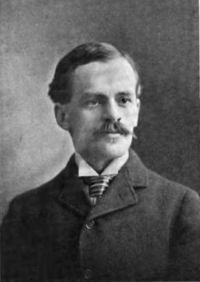 Alfred H. Lloyd,
The will to doubt
Alfred H. Lloyd,
The will to doubt
“ Between individual and class there is a difference very like that between impulse and habit, or organic life and mere physical process, or function and structure, or say human nature in terms of its life-principle, of its distinctly dynamic character, and in terms of its establishments or institutions. ”
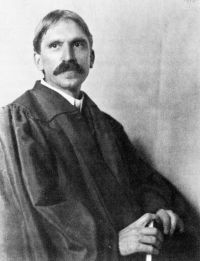 John Dewey,
Human Nature and Conduct: An introduction to social psychology
John Dewey,
Human Nature and Conduct: An introduction to social psychology
“ To get a rational basis for moral discussion we must begin with recognizing that functions and habits are ways of using and incorporating the environment in which the latter has its say as surely as the former. ”
Henry K. Rowe, Society: Its Origin and Development
“ Life is mirrored in the daily press. Pick up any newspaper and examine its contents. It reveals social characteristics both local and wide-spread.4. Social Characteristics—Activity.—The first fact that stands out clearly as a characteristic of social life is activity. Everybody seems to be doing something. There are a few among the population, like vagrants and the idle rich, who are parasites, but even they sustain relations to others that require a certain sort of effort. Activity seems fundamental. ”
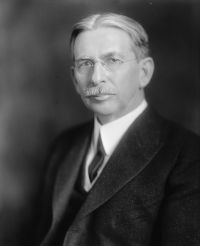 James Hartness,
Industrial Progress and Human Economics
James Hartness,
Industrial Progress and Human Economics
“ We have known for centuries that men tend to habits of thought as well as action,—that thought habits are like ruts, and these are encountered wherever the mind travels, and these ruts bring the mind back to a certain central group or community of groups of ideas. ”
 James Mill,
Analysis of the Phenomena of the Human Mind
James Mill,
Analysis of the Phenomena of the Human Mind
“ Conditions of the Growth of Association, or of the Retentiveness of the Mind.—A practical, as well as a theoretical, interest attaches to the precise statement of the conditions or circumstances that regulate the growth of our associations, in other words our mental culture generally. ”
John Dewey,
Human Nature and Conduct: An introduction to social psychology
“ The first step in dealing with it is to increase our detailed scientific knowledge. We need to know exactly the selective and directive force of each social situation; exactly how each tendency is promoted and retarded. ”
 H. G. Wells,
The New Machiavelli
H. G. Wells,
The New Machiavelli
“ I see human progress, not as the spontaneous product of crowds of raw minds swayed by elementary needs, but as a natural but elaborate result of intricate human interdependencies, of human energy and curiosity liberated and acting at leisure, of human passions and motives, modified and redirected by literature and art.... ”
John Dewey,
The public and its problems
(1927)
“ Each, as long as the conditions200 of the social medium remained substantially unaltered, will still have his experience and the direction of his restored energies affected by the objects and instrumentalities of the human environment, and by what men at the time currently prize and hold dear. ”
Nicolas August Ludwig Jacob Johannsen, Popular Science Monthly (1875)
“ Discipline, habit, and character, appear to be activity crystallized in seeking adaptation to our environments. What is the truth that stands out in relief? Clearly, that character, habit, and discipline, are the reflex upon ourselves of activity, moral, mental, or physical. Whence it seems to follow that useless or vicious activity will appear as useless or vicious character and discipline. ”
 Lester Frank Ward,
The American Journal of Sociology…
(1895)
Lester Frank Ward,
The American Journal of Sociology…
(1895)
“ All natural causes were explained after the analogy of human effort in the intentional production of effects, and the earth and air were peopled with invisible and often malignant spirits as the only recognized agents. ”
Malcolm Guthrie, On Mr. Spencer's Data of Ethics
“ These functions and structures have been accompanied by pleasure and pain, and have formed the basis of the pleasures of intellectual activity in their multiform variety. From their very nature in relation to the environment they have increased wonderfully the quantitative development of life. ”
John Dewey,
Human Nature and Conduct: An introduction to social psychology
“ This means that the make-up and working of human forces afford a basis for moral ideas and ideals. Our science of human nature in comparison with physical sciences is rudimentary, and morals which are concerned with the health, efficiency and happiness of a development of human nature are correspondingly elementary. ”
George P. Marsh, The Earth as Modified by Human Action
“ The human operations mentioned in the last few paragraphs, therefore, do act in the ways ascribed to them, though our limited faculties are at present, perhaps forever, incapable of weighing their immediate, still more their ultimate consequences. ”
J. Marshall, A Short History of Greek Philosophy
“ Now since every activity, whether of knowing or doing, aims at some good, it is for us to settle what the good is which the civic activity aims at,—what, in short, is the ultimate end of all 'goods' connected with conduct? ”
 Olive Schreiner,
Woman and Labour
Olive Schreiner,
Woman and Labour
“ It is rather an indication which shows how healthy, and deeply implanted in the substance of human life, are the roots of this movement; and it places it in a line with all those vast controlling movements which have in the course of the ages reorganised human life. ”
 Charles Richmond Henderson,
The American Journal of Sociology…
(1896)
Charles Richmond Henderson,
The American Journal of Sociology…
(1896)
“ In this fierce though voiceless contest a peculiar type of manhood is developed, characterized by vitality, energy, concentration, skill in combining numerous forces for an end, and great foresight into the consequences of social events. ”
 Auguste Comte,
A General View of Positivism
Auguste Comte,
A General View of Positivism
“ There are three successive states of morality answering to the three principal stages of human life; the personal, the domestic, and the social stage. ”
J. N. Larned, History For Ready Reference, Volume 7 (1895)
“ Thus, whether we look at the dignity of the subject matter, or at the nature of the mental exercise which it requires, or at the nature of the field over which the pursuit ranges, History, the knowledge of the adventures, the development, the changeful career, the varied growths, the ambitions, aspirations, and, if you like, the approximating destinies of mankind, claims a place second to none in the roll of Sciences. ”
 William Isaac Thomas,
The Unadjusted Girl, With Cases and Standpoint for Behavior Analysis
William Isaac Thomas,
The Unadjusted Girl, With Cases and Standpoint for Behavior Analysis
“ Human experience and schemes of personal behavior are the most interesting of all themes, as is evidenced by fiction, the drama, biographies, and histories. And works of this kind contain materials which will be given a scientific value as we analyze, compare, and interpret them. ”
John Dewey,
Human Nature and Conduct: An introduction to social psychology
“ That is, the discovery of how things do occur makes it possible to conceive of their happening at will, and gives us a start on selecting and combining the conditions, the means, to command their happening. ”
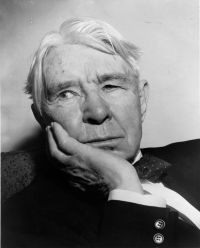 Carl Sandburg,
You and Your Job
(1910)
Carl Sandburg,
You and Your Job
(1910)
“ But many and many a lesson they learned, many and many a trick they found of using the forces of nature, many and many a habit and trait and custom they acquired, are ours—ours to-day. We are born social creatures. We live as social creatures. ”
 David Hume,
An Enquiry Concerning Human Understanding
(1748)
David Hume,
An Enquiry Concerning Human Understanding
(1748)
“ It seems, then, that nature has pointed out a mixed kind of life as most suitable to the human race, and secretly admonished them to allow none of these biasses to draw too much, so as to incapacitate them for other occupations and entertainments. Indulge your passion for science, says she, but let your science be human, and such as may have a direct reference to action and society. ”
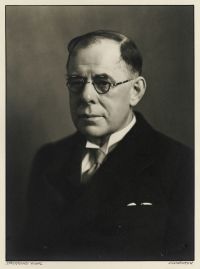 A. E. Taylor,
Elements of metaphysics
(1903)
A. E. Taylor,
Elements of metaphysics
(1903)
“ The mental growth of the individual human being is essentially a process of the formation of interests in things. 277Both our formal education, and our informal intellectual and moral training effected by the influence of social tradition and mutual intercourse, are processes consisting of an accumulation of minor modifications which ultimately culminate in the establishment of more or less unique personal interests in different aspects of existence. ”
Robert Mudie, The Modern Athens
“ To examine society with a view to determine the [160] general spirit and character of those who compose it, is like examining an animal with a view to a knowledge of the nature and operation of the living principle. If we examine it while alive and in the performance of its functions, we see the results without being able to understand the machinery ”
 Johann Gottlieb Fichte,
Characteristics of the Present Age
(1806)
Johann Gottlieb Fichte,
Characteristics of the Present Age
(1806)
“ Thus have we endeavoured to pre-figure the whole Earthly Life of Man by a comprehension of its purpose;—to perceive why our Race had to begin its Existence here, and by this means to describe the whole present Life of humankind:—this is what we wished to do,—it was our first task. ”
Various, The Continental Monthly, Vol. 5…
“ The art of preserving the health of the mind against incidents and influences calculated to deteriorate its qualities; the management of the bodily powers in regard to exercise, rest, food, clothing, climate; the laws of breeding, the government of the passions, the sympathy with current emotions and opinions, the discipline of the intellect—all come within the scope of the work. ”
Various, Popular Science Monthly (1911)
“ That understanding of the nature of the forces that shape life for us transformed the conceptions of the last century and put a new emphasis upon social efficiency in the individual as the first element of progress. ”
Related terms
Authors who wrote about “human activity”
John DeweyNicolas August Ludwig Jacob JohannsenWilliam Isaac ThomasHenry K. Rowe Wilhelm von HumboldtAlfred H. LloydWilliam JamesOlive SchreinerHerbert Spencer
 Swami VivekanandaVariousDavid HumeJohn Ruskinbaron d' Paul Henri Thiry HolbachGeorge GoreBoris SidisHenry Thomas BuckleSinclair LewisW. Mattieu WilliamsSidney Lewis Gulick