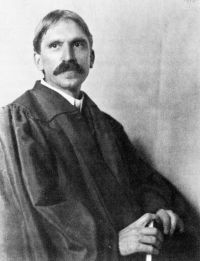
Foresight, defined as the ability to anticipate future events or needs, plays a central role in psychology, philosophy, and practical decision-making. Neuroscientific studies highlight its similarities with memory, yet distinguish it as a distinct mental capacity for imagining the future. Authors such as John Dewey emphasized its importance in guiding intentional action and education, connecting it to observation and strategy.
Saint Thomas Aquinas regarded it as an element of prudence, steering human endeavors toward ethical goals. Meanwhile, Baron Holbach cast doubt on its divine origin, emphasizing human constraints. These viewpoints collectively portray foresight as both a cognitive resource and a moral necessity, linking empirical analysis with aspirational vision.
 John Stuart Mill,
Auguste Comte and Positivism
John Stuart Mill,
Auguste Comte and Positivism