An assumption is a belief held unconsciously, often shaping thought without conscious reflection. This idea has been examined by philosophers and thinkers who analyze its role in reasoning and debate. Gilbert Keith Chesterton points out how rationalists may neglect fundamental premises, while G. E. Moore stresses the importance of examining and verifying such beliefs to establish philosophical inquiry.
John Stuart Mill challenges the implicit premise that natural order corresponds to human perception, highlighting the dangers of unexamined foundations. These viewpoints demonstrate that assumptions can be both essential and hazardous, acting as stepping-stones or obstacles in the quest for knowledge. The evidence collectively shows that assumptions, whether in science, ethics, or metaphysics, require careful evaluation to ensure they meet empirical or logical standards.
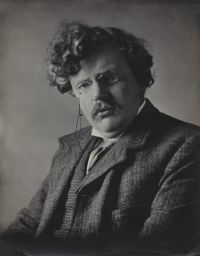 Gilbert Keith Chesterton,
Varied Types
(1908)
Gilbert Keith Chesterton,
Varied Types
(1908)