Verification

Definition and stakes

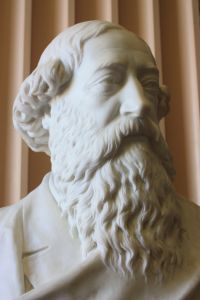
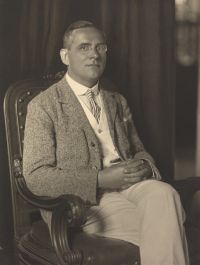
Portrait of Moritz Schlick Moritz Schlick,  Meaning and verification. (1938)

“ The possibility of verification does not rest on any ‘experiential thruth’, on a law of nature or any other true general proposition, but is determined solely by our definitions, by the rules which have been fixed for our language, or which we can fix arbitrarily at any moment. All of these rules ultimately point to ostensive definitions, as we have explained, and through them verifiability is linked to experience in the first sense of the word. ”
Source: Wikisource

William James,  Pragmatism: A New Name for Some Old Ways of Thinking

“ You accept my verification of one thing, I yours of another. We trade on each other's truth. But beliefs verified concretely by SOMEBODY are the posts of the whole superstructure.
Another great reason--beside economy of time--for waiving complete verification in the usual business of life is that all things exist in kinds and not singly. Our world is found once for all to have that peculiarity. So that when we have once directly verified our ideas about one specimen of a kind, we consider ourselves free to apply them to other specimens without verification.
”
Source: Wikisource

Frederick Joseph Bramwell,  Popular Science Monthly (1877)

“ What will first strike you is, that that is an hypothesis which, whether true or false, is not capable of verification by evidence; for, in order to secure testimony to an eternity of duration, you must have an eternity of witnesses or an infinity of circumstances, and neither of these is attainable. It is utterly impossible that such evidence should be carried beyond a certain point of time, and all that could be said at most should be that there was nothing to contradict the hypothesis. ”
Source: Wikisource

Get perspective with Kwize: daily news enlightened by great literature