Charles Robert Newman

Biographical details

Charles Robert Newman,  Essays in Rationalism

“ No science can flourish while it is understood that its discussion must be made palatable to the public. In any supposable code of the rights of reason, one primary article would limit and define the functions of the public in the investigation of truth—a topic which, together with the kindred inquiry, Who are the public? is suggested by your second query.
Mankind have naturally a degree of antipathy for reason. They have found Reason, in the work he affects, dull, in the help he furnishes, deficient, in the truth he unveils, ugly, in the rule he arrogates, imperious.
”
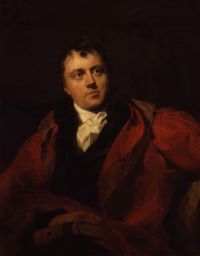
Source: Gutenberg

Charles Robert Newman,  Essays in Rationalism

“ The Rights of Reason may at present be said to be in such a germ of their acknowledgment as were the rights of conscience three centuries ago. Mankind have not hitherto come to acquiesce in the idea of that parsimony of guidance vouchsafed to man, which is found to be the result of claiming for reason the power of calling all human thoughts before his tribunal, and seeing whether he has anything to object to them. ”
Source: Gutenberg

Charles Robert Newman,  Essays in Rationalism

“ In no times could mankind think and observe without becoming aware of these two principles of order—whether you call them facts or inferences—as a portion of their familiar experience. And so far as they might have compared them, they must have abundantly seen that the natural one is more powerful than the artificial one, and that the straight line or the circle must seek its perfection much rather from the plummet or the revolving radius, than from the pencil of Apelles. ”
Source: Gutenberg

Get perspective with Kwize: daily news enlightened by great literature