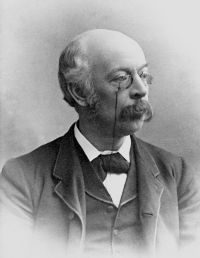
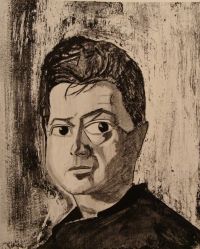
Robert Adamson and John Malcolm Mitchell

Biographical details

Robert Adamson and John Malcolm Mitchell 1911 Encyclopædia Britannica (1911)

To Bruno, as to all great thinkers, philosophy is the search for unity. Amid all the varying and contradictory phenomena of the universe there is something which gives coherence and intelligibility to them. Nor can this unity be something apart from the things; it must contain in itself the universe, which develops from it; it must be at once all and one. This unity is God, the universal substance,—the one and only principle, or causa immanens,—that which is in things and yet is distinct from them as the universal is distinct from the particular.
Source: Wikisource

Robert Adamson and John Malcolm Mitchell 1911 Encyclopædia Britannica, Volume 13… (1911)

All our knowledge is but the sum of our conscious experience, and is consequently material for imagination. “Let us fix our attention out of ourselves as much as possible; let us chase our imagination to the heavens or to the utmost limits of the universe; we never really advance a step beyond ourselves, nor can conceive any kind of existence, but those perceptions which have appeared in that narrow compass. This is the universe of the imagination, nor have we any idea but what is there produced.”
Source: Wikisource

Robert Adamson and John Malcolm Mitchell 1911 Encyclopædia Britannica (1910)

Nature thus presented itself to Bacon’s mind as a huge congeries of phenomena, the manifestations of some simple and primitive qualities, which were hid from us by the complexity of the things themselves. The world was a vast labyrinth, amid the windings of which we require some clue or thread whereby we may track our way to knowledge and thence to power. This thread, the filum labyrinthi, is the new method of induction.
Source: Wikisource

Get perspective with Kwize: daily news enlightened by great literature