Theory of knowledge

Definition and stakes

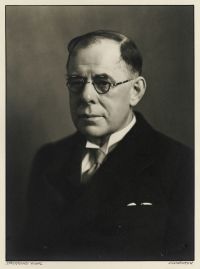
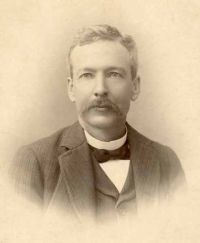
Herbert Wildon Carr,  The Problem of Truth

“ So far we have looked at our intellectual endowment from the standpoint of ordinary common-sense experience. Let us now consider the philosophical theory based on this view, which explains the nature of knowledge by showing its purpose. The intellect not only selects, but in selecting transforms the reality. It presents us with knowledge that indeed corresponds with reality, for it is essentially a view of reality, but also in selecting it marks out divisions, and gives to reality a form that is determined by practical interest. ”
Source: Gutenberg

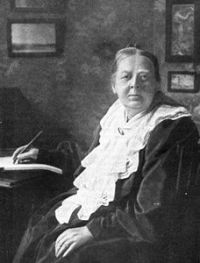
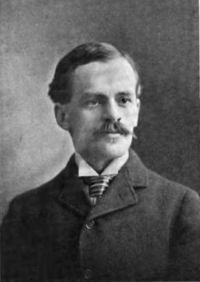
Portrait of Alexander Philip Alexander Philip,  Essays Towards a Theory of Knowledge

“ Finding its elemental forms in the structure of the organ of Knowledge, it failed to tell us how we ever managed by means of these to get beyond our own subjective states, or how we ever came to think that there was a World outside of the individual consciousness, by the categories of which, according to them, our cognitions of such a World were called into being. ”
Source: Gutenberg

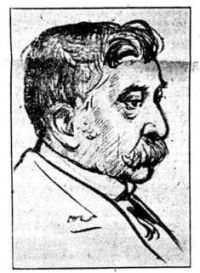
Portrait of A. E. Taylor A. E. Taylor,  Elements of metaphysics (1903)

“ The Good and the Beautiful, no less than the True, are the objects of our study.
17Again, if the name Theory of Knowledge is understood, as it sometimes has been, to suggest that it is possible to study the nature and capabilities of the knowing faculty apart from the study of the contents of knowledge, it becomes a source of positive and dangerous mistake. The capabilities and limitations of the knowing faculty can only be ascertained by inquiring into the truth of its knowledge, regarded as an apprehension of reality
”
Source: Gutenberg

Get perspective with Kwize: daily news enlightened by great literature