Summary

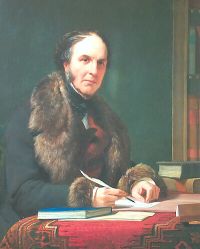
Portrait of Nassau William Senior Nassau William Senior Four Introductory Lectures on Political Economy

Political Economy, then, is a science. But he goes on to say, that “the object of Political Economy is to point out the means by which the industry of man may be rendered most productive of wealth, the circumstances most favourable to its accumulation, and the mode in which it may be most advantageously consumed.” So defined, Political Economy is an art,—a branch, in fact the principal branch, of the art of government.
Source: Gutenberg

Portrait of Nassau William Senior Nassau William Senior Four Introductory Lectures on Political Economy

But though I follow substantially the example of Turgot and Ricardo, I do not propose to follow it implicitly. Though I profess to teach only the theory of wealth, I do not refuse the right to consider its practical application. There is, indeed, something imposing and almost seductive in a work of pure science, especially if it be a science connected with human affairs. We admire the impartiality of the philosopher who discusses matters that agitate nations without mixing in the strife, or noticing the use that may be made of the truths which he scatters.
Source: Gutenberg

Portrait of Nassau William Senior Nassau William Senior Four Introductory Lectures on Political Economy

It is for this reason that the collection of related facts which constitute a science is generally a less complex thing than the collection of related precepts which constitute an art. A single science may be complete in itself;—a man may confine himself to chemistry, or to zoology, or to botany. He may pursue any one of those sciences to the boundaries of existing knowledge, and know nothing of the others. But an art must draw its materials from many sciences.
Source: Gutenberg

Get perspective with Kwize: daily news enlightened by great literature