James Monroe, State of the Union Addresses
“ The payments which have been made into the Treasury show the very productive state of the public revenue. ”
James Monroe, State of the Union Addresses
“ The payments which have been made into the Treasury show the very productive state of the public revenue. ”
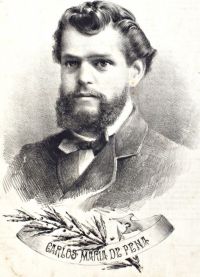 Carlos María de Pena,
The Oriental Republic of Uruguay at the World's Columbian Exhibition…
Carlos María de Pena,
The Oriental Republic of Uruguay at the World's Columbian Exhibition…
“ The public revenue is derived from the custom duties, direct taxes on property, licenses to trade houses, stamped paper, stamps, import and export duties, port dues, municipal duties in the capital and in the departments, duties on indirect inheritance, trade patents, cattle marks, etc. ”
M. Garnier, An Inquiry Into the Nature and Causes of the Wealth of Nations
“ The only considerable branch of the public revenue which yet remains unmortgaged, is thus regularly spent before it comes in. Like an improvident spendthrift, whose pressing occasions will not allow him to wait for the regular payment of his revenue, the state is in the constant practice of borrowing of its own factors and agents, and of paying interest for the use of its own money. ”
 Grover Cleveland,
Eighth State of the Union Address
(1896)
Grover Cleveland,
Eighth State of the Union Address
(1896)
“ Every consideration of care for the public interest and every sensible business reason dictate such management or disposal of this important source of public revenue as will except it from the general rules and incidents attending the ordinary disposition of public lands and secure to the Government a fair share at least of its advantages in place of its transfer for a nominal sum to interested individuals. ”
United States. Presidents, State of the Union Addresses (1790-2006…
“ Among these none holds a more important place than the public revenue, from the direct operation of the power by which it is raised on the people, and by its influence in giving effect to every other power of the Government. The revenue depends on the resources of the country, and the facility by which the amount required is raised is a strong proof of the extent of the resources and of the efficiency of the Government. ”
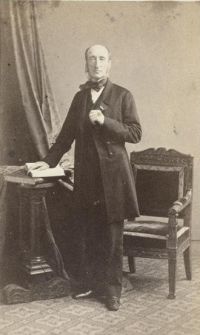 Michel Chevalier,
Society, Manners and Politics in the United States
Michel Chevalier,
Society, Manners and Politics in the United States
“ It is important to remark, that the public revenue in the United States is almost wholly employed in a productive manner, in useful undertakings, in public works, schools, and various kinds of improvements. ”
Adam Ferguson, An Essay on the History of Civil Society…
“ The wealth of the state consists in the fortune of its members. The actual revenue of the state is that share of every private fortune, which the public has been accustomed to demand for national purposes. This revenue cannot be always proportioned to what may be supposed redundant in the private estate, but to what is, in some measure, thought so by the owner; and to what he may be made to spare, without intrenching on his manner of living, and without suspending his projects of expense, or of commerce. ”
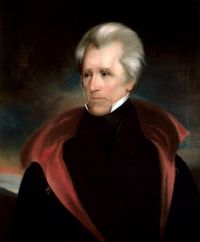 Andrew Jackson,
Andrew Jackson's First Inaugural Address
(1829)
Andrew Jackson,
Andrew Jackson's First Inaugural Address
(1829)
“ The management of the public revenue—that searching operation in all governments—is among the most delicate and important trusts in ours, and it will, of course, demand no inconsiderable share of my official solicitude. Under every aspect in which it can be considered it would appear that advantage must result from the observance of a strict and faithful economy. ”
 Thomas Jefferson,
The Writings of Thomas Jefferson…
Thomas Jefferson,
The Writings of Thomas Jefferson…
“ I am for a government rigorously frugal and simple, applying all the possible savings of the public revenue to the discharge of the national debt; and not for a multiplication of officers and salaries merely to make partisans, and for increasing, by every device, the public debt, on the principle of its being a public blessing. ”
M. Garnier, An Inquiry Into the Nature and Causes of the Wealth of Nations
“ It does not seem necessary that the expense of those public works should be defrayed from that public revenue, as it is commonly called, of which the collection and application are in most countries, assigned to the executive power. The greater part of such public works may easily be so managed, as to afford a particular revenue, sufficient for defraying their own expense, without bringing any burden upon the general revenue of the society. ”
United States. Presidents, State of the Union Addresses (1790-2006…
“ And we shall have the proud satisfaction of bequeathing to the public servants who follow us in the administration of the Government the rare blessing of a revenue sufficiently abundant, raised without injustice or oppression to our citizens, and unencumbered with any burdens but what they themselves shall think proper to impose upon it. The flourishing state of the finances ought not, however, to encourage us to indulge in a lavish expenditure of the public treasure. The receipts of the present year do not furnish the test by which we are to estimate the income of the next. ”
Walter Raleigh Houghton, Conspectus of the History of Political Parties and the Federal Government (1880)
“ Resolved, That it is the duty of every branch of the government to enforce and practice the most rigid economy in conducting our public affairs, and that no more revenue ought to be raised than is required to defray the necessary expenses of the government. ”
Charles William Eliot and William Allan Neilson, The Harvard Classics Vol. 51 (1914)
“ In the mediæval and early modern period, the chief interest in economics had shifted from the private to the public aspects of the science, but was still centered mainly in problems of public revenue and expenditure, or, as we should now say, public finance. The chief students in this field were the finance ministers, who were charged with the office of raising revenue for the royal household and the enterprises both constructive and military of the king. It was soon apparent that the amount of royal revenue was strictly limited by the wealth of the people. ”
Charles Francis Bastable, 1911 Encyclopædia Britannica, Volume 10… (1911)
“ The earliest forms of public revenue are those obtained from the property of the chief or ruler. Land, cattle and slaves are the principal kinds of wealth, and they are all constituents of the king’s revenue; enforced work contributed by members of the community, and the furnishing commodities on requisition, further aid in the maintenance of the primitive state. Financial organization makes its earliest appearance in the great Eastern monarchies, in which tribute was regularly collected and the oldest and most general form of taxation—that levied on the produce of land—was established. ”
Charles William Eliot and William Allan Neilson, The Harvard Classics Vol. 51 (1914)
“ In a monarchy the providing of revenues for the king's household, and the expenditure of those revenues in the support of the household, may approximate very closely to the character of private economics, as when the chief source of revenue is the royal demesne, or to public economics when the chief source of revenue is taxation, and the king is regarded merely as a public official to be supported as other public officials are. ”
A Biography of Henry Clay, the Senator from Kentucky
“ The government must have a certain amount of revenue, and that amount must be collected from the imports. Is it material to the consumer, wherever situated, whether the collection be made upon a few, or many objects, provided, whatever be the mode, the amount of his contribution to the public exchequer remains the same? If the assessment can be made on objects which will greatly benefit large portions of the union, without injury to him, why should he object to the selection of those objects? ”
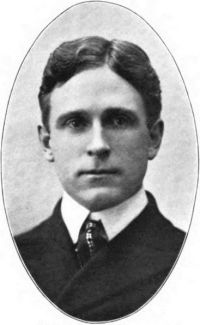 Archer Butler Hulbert,
The Great American Canals (Volume II)
(1904)
Archer Butler Hulbert,
The Great American Canals (Volume II)
(1904)
“ Our taxes of course will be diminished, and a considerable portion of revenue may then be expended in great public improvements; in encouraging the arts and sciences; in patronising the operations of industry; in fostering the inventions of genius, and in diffusing the blessings of knowledge. ”
Andrew Jackson,
Fourth State of the Union Address
(1832)
“ The soundest maxims of public policy and the principals upon which our republican institutions are founded recommend a proper adaptation of the revenue to the expenditure, and they also require that the expenditure shall be limited to what, by an economical administration, shall be consistent with the simplicity of the Government and necessary to an efficient public service. ”
George Rose, Observations respecting the public expenditure… (1810)
“ Among other advantages derived from the labours of the Committees of Finance, the public is accurately informed of the burthens upon it, and bow every part of its income is dispofed of. Hence we are enabled to state, with precision, the charge incurred by pensions and sinecure employments, and to compare that with the whole of the revenue, which it appears to be desirable should be done, as many well-intentioned persons have taken an impression, that if all those were put an end to, the public might be relieved from a considerable proportion of its burthens. ”
 Adam Smith,
An Inquiry into the Nature and Causes of the Wealth of Nations…
(1902)
Adam Smith,
An Inquiry into the Nature and Causes of the Wealth of Nations…
(1902)
“ Government, by establishing an administration under their own immediate inspection of the same kind with that which the farmer establishes, might at least save this profit, which is almost always exorbitant. To farm any considerable branch of the public revenue requires either a great capital or a great credit ”
Charles William Eliot and William Allan Neilson, The Harvard Classics Vol. 51 (1914)
“ Every government, considered as a corporate body, has needs of its own apart from those of the people whom it governs. Whether it be a city, a state, or a smaller governing unit, it must solve the problems of revenue and expenditure just as a private household. Later writers applied the term economics mainly to this group of problems to which we now apply the name public finance, rather than to that group which in the diagram above are included under Private Economics. ”
William McKinley, A Supplement to A Compilation of the Messages and Papers of the Presidents…
“ It is, therefore, earnestly hoped and expected that Congress will, at the earliest practicable moment, enact revenue legislation that shall be fair, reasonable, conservative, and just, and which, while supplying sufficient revenue for public purposes, will still be signally beneficial and helpful to every section and every enterprise of the people. ”
Adam Smith,
The Wealth of Nations
(1776)
“ Political economy, considered as a branch of the science of a statesman or legislator, proposes two distinct objects; first, to provide a plentiful revenue or subsistence for the people, or, more properly, to enable them to provide such a revenue or subsistence for themselves; and, secondly, to supply the state or commonwealth with a revenue sufficient for the public services. It proposes to enrich both the people and the sovereign. ”
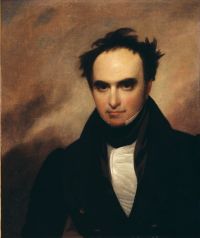 Daniel Webster,
The Great Speeches and Orations of Daniel Webster
Daniel Webster,
The Great Speeches and Orations of Daniel Webster
“ He smote the rock of the national resources, and abundant streams of revenue gushed forth. He touched the dead corpse of the Public Credit, and it sprung upon its feet. ”
Walter Raleigh Houghton, Conspectus of the History of Political Parties and the Federal Government (1880)
“ The annual revenue, after paying current expenditures, pensions, and the interest on the public debt, should furnish a moderate balance for the reduction of the principal; and that revenue, except so much as may be derived from a tax upon tobacco and liquors, should be raised by duties upon importations, the details of which should be so adjusted as to aid in securing remunerative wages to labor, and promote the industries, prosperity, and growth of the whole country. ”
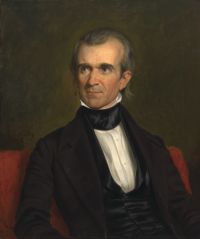 James K. Polk,
State of the Union Addresses
James K. Polk,
State of the Union Addresses
“ Some articles will bear a much higher revenue duty than others. Below the maximum of the revenue standard Congress may and ought to discriminate in the rates imposed, taking care so to adjust them on different articles as to produce in the aggregate the amount which, when added to the proceeds of the sales of public lands, may be needed to pay the economical expenses of the Government. ”
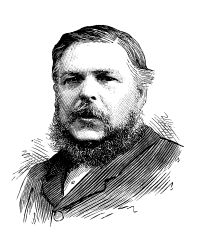 Robert Giffen,
1911 Encyclopædia Britannica
(1911)
Robert Giffen,
1911 Encyclopædia Britannica
(1911)
“ In other countries, even at the present time, there is a large public domain yielding revenue. Local authorities also largely own property from which a revenue is obtained. But as a rule, and in spite of what has often been the practice in the past, and of exceptions which may still exist in some countries, a government obtains the money required for its expenses by means of taxation. ”
John McLean, United States v. Bromley — Opinion of the Court
“ Revenue is the income of a state, and the revenue of the Post-Office Department, being raised by a tax on mailable matter conveyed in the mail, and which is disbursed in the public service, is as much a part of the income of the government as moneys collected for duties on imports. ”
William Beckford, Remarks Upon the Situation of Negroes in Jamaica (1788)
“ These various resources might, if properly directed, and prudently extended, very considerably augment the public revenues, and thereby help to ease those taxes, which at present press so heavily upon all ranks and conditions of men. ”
Various, The Contemporary Review, Volume 36…
“ We have explained to the people of this country that the additional revenue raised by the new taxes is required, not for luxuries, but the necessities of the State; not for general purposes, but for the construction of a particular class of public works; and we have pledged ourselves not to spend one rupee of the special resources, thus created, upon works of a different character.... The pledges which my financial colleague was authorized to give, on behalf of the Government, were explicit and full as regards these points.... ”
J. E. Esslemont, Bahá'u'lláh and the New Era
“ Public Finance ‘Abdu’l-Bahá suggests that each town and village or district should be entrusted as far as possible with the administration of fiscal matters within its own area and should contribute its due proportion for the expenses of the general government. One of the principal sources of revenue should be a graduated income tax. ”
Benjamin Harrison, Fourth State of the Union Address (1892)
“ Public revenues amounting to $1,414,079,292.28 have been collected and disbursed without loss from misappropriation, without a single defalcation of such importance as to attract the public attention, and at a diminished per cent of cost for collection. The public business has been transacted not only with fidelity, but progressively and with a view to giving to the people in the fullest possible degree the benefits of a service established and maintained for their protection and comfort. ”
Pearson Hill, The Post Office of Fifty Years Ago (1887)
“ But whatever distinction may be observed between the more general and primary purposes of this institution, and its value separately regarded as an immediate source of revenue to the Crown, it will be found that the same means may be employed to promote its several objects; and that, in a prosperous state of the country, its productiveness, in a financial calculation, will be measured by the proportion in which, under judicious management, it is made to contribute to the interests, the convenience, and the habitual indulgence of the community. ”
 Alice Stopford Green,
Town Life in the Fifteenth Century…
Alice Stopford Green,
Town Life in the Fifteenth Century…
“ There the people heard the list of fines levied in the courts; of tolls in the market, or taxes taken at the gates or in the harbour; of the “maltodes,” or sums paid on commodities for sale; of the “scot” levied on the property of individuals; of the “lyvelode” or livelihood, an income tax on rates or profits earned. They learned what means the corporation had taken of increasing the common revenue ”
 John Clark Ridpath,
The Life and Work of James A. Garfield…
John Clark Ridpath,
The Life and Work of James A. Garfield…
“ Revenue and the expenditure of revenue form by far the most important element in the government of modern nations. Revenue is not, as some one has said, the friction of a government, but rather its motive power. Without it the machinery of a government can not move; and by it all the movements of a government are regulated. The expenditure of revenue forms the grand level from which all heights and depths of legislative action are measured. The increase and the diminution of the burdens of taxation depend alike upon their relation to this level of expenditures. ”
Adam Smith,
The Wealth of Nations
(1776)
“ Lands, for the purposes of pleasure and magnificence, parks, gardens, public walks, etc. possessions which are everywhere considered as causes of expense, not as sources of revenue, seem to be the only lands which, in a great and civilized monarchy, ought to belong to the crown. ”
Grover Cleveland,
Second State of the Union Address
(1886)
“ But we have arrived at a stage of superfluous revenue which has aroused the people to a realization of the fact that the amount raised professedly for the support of the Government is paid by them as absolutely if added to the price of the things which supply their daily wants as if it was paid at fixed periods into the hand of the tax gatherer. ”
Colonel House, Philip Dru: Administrator — Chapter XXXIV: Selwyn's Story (1912)
“ Being essential, then it must have funds with which to proceed, and the men devoting their lives to it must be recompensed, so the system we use is the best that can be devised under the circumstances.“It is like the tariff and internal revenue taxes by which the National Government is run, that is, indirect. The citizen pays, but he does not know when he pays, nor how much he is paying. ”
Adam SmithGeorge RoseM. GarnierPearson HillAndrew JacksonRoland P. FalknerRobert GiffenGrover Cleveland Edmund BurkeGeorge GordonJames MonroeCharles William Eliot and William Allan NeilsonUnited States. PresidentsSir W. H. SleemanAndrew JohnsonJames K. PolkCharles Francis BastableWhately C. ArnoldMartin Van BurenFranklin Pierce