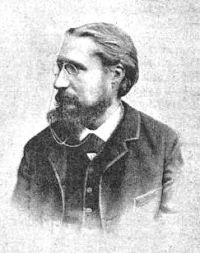
Robert Giffen

Biographical details

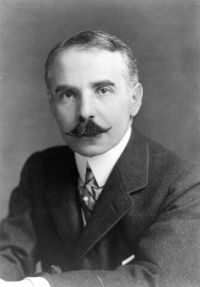
Portrait of Robert Giffen Robert Giffen 1911 Encyclopædia Britannica (1911)

The payers of income tax, unfortunately, are not one class but many, and although the rate of duty is the same, the dentition of income seems imperfect, so that many pay on a much larger assessment of income than seems fair in comparison with other incomes of nominally the same amount, but really of much greater value when all deductions from the gross sum are fairly reckoned. If all who pay income tax are lumped together and contrasted with those who do not pay, then there is a false division to begin with, and there is so far no means of establishing equality or inequality.
Source: Wikisource

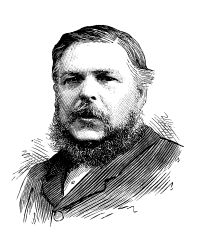
Portrait of Robert Giffen Robert Giffen Popular Science Monthly (1884)

Assuming capital to have increased in proportion, it is not to be wondered at that the impression of a group of people called the capitalist classes getting richer and richer while the mass remain poor or become poorer should be entertained. Allowing for the increase of population, the growth of capital and income-tax income are really much smaller than the growth of the money income of the working-classes, which we have found to be something like 50 to 100 per cent and more per head in fifty years, but the impression to the contrary undoubtedly exists, and is very natural.
Source: Wikisource

Portrait of Robert Giffen Robert Giffen 1911 Encyclopædia Britannica (1911)

Along with this view has arisen the question whether the burden of taxation should not be progressive—the proportion of the sum taken by the state from the tax-payers increasing with the wealth of the individual; because ability to pay taxes is assumed to be not in proportion to, but to increase with the size of, the income.
What opinion should be held regarding this modern view as to equality in taxation, which differs so widely from anything countenanced by Adam Smith, though his language is echoed in it?
Source: Wikisource

Get perspective with Kwize: daily news enlightened by great literature