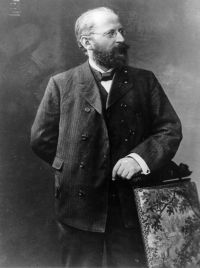
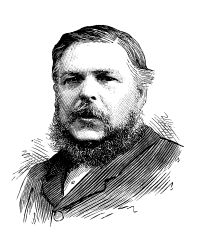
Anne-Robert-Jacques Turgot, Baron de Laune

Biographical details

Anne-Robert-Jacques Turgot, Baron de Laune Reflections on the Formation and the Distribution of Riches (1898)

A kind of equilibrium establishes itself between the value of all the productions of the land, the consumption of the different kinds of commodities, the different sorts of works, the number of men employed at them, and the price of their wages.
Wages can be fixed and remain constantly at a definite point only in virtue of this equilibrium, and of the influence which all the parts of the society, all the branches of production and commerce, exercise upon one another.
Source: Wikisource

Anne-Robert-Jacques Turgot, Baron de Laune Reflections on the Formation and the Distribution of Riches (1898)

In the case of the workman's wages, the fundamental price is what his subsistence costs the workman. You cannot tax the man who receives wages without increasing the price of his subsistence, since he has to add to his old expenditure that involved by the tax. You thus increase the fundamental price of labour.
Source: Wikisource

Anne-Robert-Jacques Turgot, Baron de Laune Reflections on the Formation and the Distribution of Riches (1898)

But although the fundamental price be not the immediate principle of the current value, [16] it is nevertheless a minimum below which it cannot fall. For if a merchant loses by his trade, he ceases to sell or manufacture; if a workman cannot live by his labour, he becomes a mendicant or leaves the country. That is not all: it is necessary that the workman obtain a certain profit, [17] to provide for accidents, to bring up his family. In a nation where trade and industry are free and vigorous, competition fixes this profit at the lowest possible rate.
Source: Wikisource

Get perspective with Kwize: daily news enlightened by great literature