Taxes

Definition and stakes

Various,  Popular Science Monthly (1901)

“ I have been led to this conclusion that all taxes are slowly but surely diffused throughout the community—some directly, others indirectly—by reasoning upon the subject without measuring the tax in terms of money—money being only the medium by which the real tax is measured and brought to the use of the government. Does not the same distinction apply to taxes that applies to wages? ”
Source: Wikisource

Geo. T. Fairchild,  Rural Wealth and Welfare: Economic Principles Illustrated and Applied in Farm Life

“ Direct and indirect taxation.—For convenience of study, taxes are spoken of as either direct or indirect; that is, a tax may be levied upon one whose property or earnings must be reduced by the amount of the tax, or a tax may be levied upon one whose property when sold, or whose service when rendered to another, will be worth as much more as the burden of the tax he has paid. ”
Source: Gutenberg

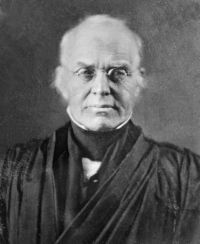
Portrait of Joseph Story Joseph Story,  Commentaries on the Constitution of the United States (1833)

“ But the more important inquiry is, what are direct taxes in the sense of the constitution, since they are required to be laid by the rule of apportionment, and all indirect taxes, whether they fall under the head of "duties, imposts, or excises," or under any other description, may be laid by the rule of uniformity. It is clear, that capitation taxes, [97] or, as they are more commonly called, poll taxes, that is, taxes upon the polls, heads, or persons, of the contributors, are direct taxes, for the constitution has expressly enumerated them, as such. ”
Source: Wikisource

Get perspective with Kwize: daily news enlightened by great literature