Summary

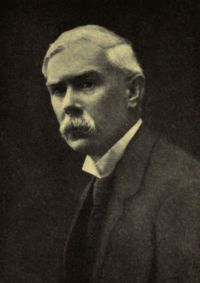
Portrait of John Arthur Thomson John Arthur Thomson The Outline of Science — Part V

Every human being begins his or her life as a single cell--a fertilised egg-cell, a treasure-house of all the ages. For in this living microcosm, only a small fraction (1/125) of an inch in diameter, there is condensed--who can imagine how?--all the natural inheritance of man, all the legacy of his parentage, of his ancestry, of his long pre-human pedigree. Darwin called the pinhead brain of the ant the most marvellous atom of matter in the world, but the human ovum is more marvellous still. It has more possibilities in it than any other thing, yet without fertilisation it will die.
Source: Wikisource

Portrait of John Arthur Thomson John Arthur Thomson The Outline of Science — Part V

No one thinks less of Sir Isaac Newton because he was born as a very puny infant, and no one should think less of the human race because it sprang from a stock of arboreal mammals. There is no doubt as to man's apartness from the rest of creation when he is seen at his best--"a little lower than the angels, crowned with glory and honour." "What a piece of work is a man!
Source: Wikisource

Portrait of John Arthur Thomson John Arthur Thomson The Outline of Science — Part V

If our earth had been so clouded that the stars were hidden from men's eyes the whole history of our race would have been different. For it was through his leisure-time observations of the stars that early man discovered the regularity of the year and got his fundamental impressions of the order of Nature--on which all his science is founded.
If we are to think clearly of the factors of human progress we must recall the three great biological ideas--the living organism, its environment, and its functioning.
Source: Wikisource

Get perspective with Kwize: daily news enlightened by great literature