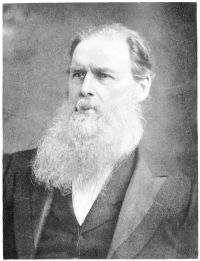
Edward Burnett Tylor

Edward Burnett Tylor

Summary

Portrait of Edward Burnett Tylor Edward Burnett Tylor Encyclopædia Britannica, Ninth Edition (1878)

It is undoubted that comparative anatomy and physiology, by treating the human species as one member of a long series of related organisms, have gained a higher and more perfect understanding of man himself and his place in the universe than could have been gained by the narrower investigation of his species by and for itself. It is to be regretted that hitherto certain other sciences psychology, ethics, and even philology and sociology have so little followed so profitable an example.
Source: Wikisource

Portrait of Edward Burnett Tylor Edward Burnett Tylor Encyclopædia Britannica, Ninth Edition (1878)

Philosophy seeking knowledge for its own sake ; morality, manifested in the sense of truth, right, and virtue; and religion, the belief in and communion with superhuman powers ruling and pervading the universe, are human characters, of which it is instructive to trace, if possible, the earliest symptoms in the lower animals, but which can there show at most only faint and rudimentary signs of their wondrous development in mankind.
Source: Wikisource

Portrait of Edward Burnett Tylor Edward Burnett Tylor Encyclopædia Britannica, Ninth Edition (1878)

The obvious answer is, that the power of using words as signs to express thoughts with which their sound does not directly connect them, in fact as arbitrary symbols, is the highest grade of the special human faculty in language, the presence of which binds together all races of mankind in substantial mental unity. The measure of this unity is, that any child of any race can be brought up to speak the language of any other race.
Source: Wikisource

Get perspective with Kwize: daily news enlightened by great literature